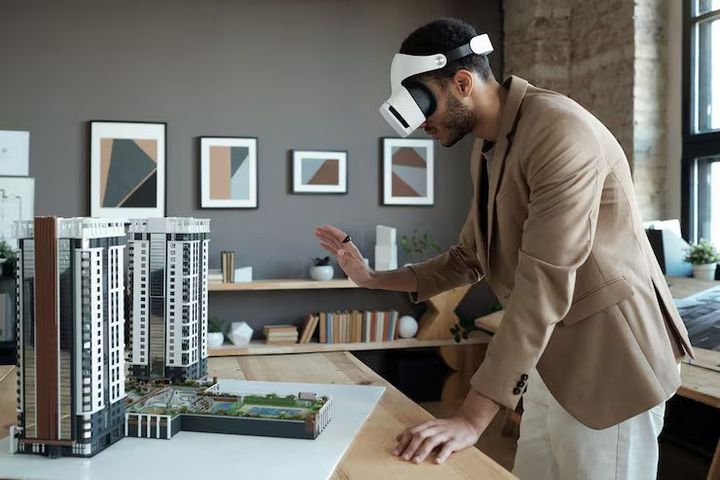
Guide To VR in Real Estate: Virtual Property Tours Explained
Virtual Reality (VR) in real estate has emerged as an important digital tool that transforms the way properties are presented, explored, and understood. Instead of relying only on static photos or traditional physical visits, VR enables viewers to walk through rooms, examine layouts, and visualize interior features from anywhere in the world. These immersive tours simulate real environments using 360-degree imagery or full 3D-rendered models.
The concept developed gradually as property industries began adopting advanced visualization technologies. With improvements in hardware, such as VR headsets and mobile-based viewing systems, virtual property tours have become more accessible. They allow builders, architects, and real estate professionals to present planned developments even before construction starts. This creates a more interactive experience, supporting better understanding of space, structure, and design.
VR technology is now used for new developments, residential listings, commercial spaces, and large-scale infrastructure projects. It offers a structured method to showcase properties, enabling users to explore floor plans, interior options, and environment settings with realistic detail.

Importance
VR plays a significant role in modern real estate because it supports better communication, more accurate visualization, and efficient decision-making. It affects various groups, including:
-
Home seekers comparing multiple properties
-
Architects presenting design concepts
-
Developers showcasing upcoming projects
-
Real estate professionals offering guided digital tours
-
International clients unable to visit properties physically
The use of VR helps address several challenges:
-
Geographical limitations: Viewers can inspect spaces remotely.
-
Time efficiency: Multiple properties can be explored in a short duration.
-
Early design evaluation: Planners can refine models before construction.
-
Better spatial understanding: Room flow and dimensions become clearer.
-
Accessibility: Remote viewing helps accommodate different schedules.
The technology supports transparency by showing real-time spatial information and reducing the need for repeated site visits. It also enhances the decision-making process, especially for large properties or developments not yet built.
Recent Updates
Recent years have brought noticeable advancements in the convergence of VR and real estate visualization. Several updates from 2024–2025 shaped the way virtual tours are created and used:
Hardware Developments (2024–2025)
-
New VR headsets introduced lighter designs, improved motion tracking, and higher-resolution displays.
-
Standalone headsets became more common, reducing the need for external computers.
-
Hand-tracking improvements offered smoother navigation inside virtual tours.
Tool Enhancements
-
More platforms began using AI-supported rendering, improving lighting accuracy and interior detailing.
-
Faster 3D modeling workflows enabled quicker updates for property plans.
-
Several apps added soundscapes and environmental simulations to show how spaces feel at different times of the day.
Industry Adoption Trends
-
Large real estate developers increased use of virtual showrooms for upcoming projects.
-
Architects adopted VR walkthroughs in 2024 design cycles for better client presentations.
-
Commercial real estate displayed growing interest in virtual workspace visualizations, especially for global companies examining office layouts.
Visitor Behavior Insights (2024)
Digital data from property-viewing platforms showed that virtual tours improved viewer engagement. Many users interacted longer with listings that included VR walkthroughs compared to static galleries.
Laws or Policies
VR in real estate interacts with several regulatory areas, particularly regarding property representation, consumer transparency, and data protection. These principles vary by country but generally include:
Digital Information Accuracy Guidelines
Real estate sectors in many regions provide rules ensuring that digital property information must be accurate and not misleading. VR tours must reflect actual layouts, approved plans, and structural dimensions.
Construction Plan Regulations
For upcoming developments, local authorities often require project plans to be cleared before being used for public demonstration. VR models must align with approved blueprints to avoid misrepresentation.
Privacy and Data Handling Policies
Virtual tours created for inhabited properties must ensure that personal belongings, identifiable items, or private information are not displayed. Many regions include privacy clauses requiring property owners’ consent before creating interior scans.
Accessibility Standards
Some countries encourage digital tools to be usable for various audiences, including features like guided narration or simplified navigation for users who may need greater accessibility.
Intellectual Property Regulations
Designers, architects, and developers hold rights to 3D models or VR content. Reuse requires relevant permissions and compliance with creative property guidelines.
Understanding these rules ensures that VR tours remain transparent, accurate, and ethical.
Tools and Resources
Multiple tools help create, view, and analyze VR content in the real estate sector. These include visualization platforms, modeling software, planning apps, and supportive digital resources.
VR Creation Tools
-
3D modeling software for architectural structures
-
Virtual tour creation platforms using 360-degree cameras
-
Real-time rendering engines for interactive walkthroughs
Viewing Tools
-
VR headsets supporting standalone or mobile viewing
-
Browser-based virtual tour viewers
-
Online 3D navigation tools for interactive floor plans
Planning & Analysis Resources
-
Floor-plan mapping tools
-
Property layout comparison charts
-
Interior design visualization apps
-
Space-measurement and evaluation tools
Project Management Resources
-
Collaboration dashboards shared between builders and clients
-
Cloud-based model-storage platforms
-
Version-tracking tools for design updates
These tools support different stages of property exploration, from early design drafts to public viewing experiences.
How VR Virtual Property Tours Work
1. Digital Capture or Model Creation
Depending on the project, creators use 360-degree cameras to capture existing spaces or design software to build digital models for planned properties.
2. Rendering and Editing
The digital environment is processed using rendering engines, adding textures, lighting, shadows, and realistic elements.
3. Scene Integration
Designers combine multiple rooms or zones, forming a continuous navigable path.
4. Interactive Features
VR tours may include:
-
Hotspots for navigation
-
Pop-up info panels
-
Layout previews
-
Room dimension markers
-
Furniture configuration options
5. Viewing Experience
Users access the VR tour through headsets, smartphones, or browser-based viewers. They can rotate views, walk through rooms, and examine features from different angles.
Comparing VR Tour Types
| Tour Type | Best For | Visualization Quality | Suitable Use |
|---|---|---|---|
| 360-Degree Tour | Existing properties | Medium | Residential and rental walkthroughs |
| 3D Rendered VR Tour | Under-construction properties | High | New developments & architectural previews |
| Interactive VR Simulation | Complex projects | Very High | Large commercial projects and design evaluations |
This comparison helps users understand which VR format suits different property categories.
Benefits of VR in Real Estate
-
Remote exploration supports convenient viewing from anywhere.
-
Enhanced understanding of room proportions and layout flow.
-
Early concept evaluation gives architects and planners more clarity.
-
Improved communication helps bridge gaps between builders and clients.
-
Higher engagement for property listings with immersive content.
-
Better decision-making through realistic visualization.
These advantages demonstrate why VR has become a preferred technology for showcasing properties.
FAQs
1. What is the main purpose of VR in real estate?
VR helps people explore properties in a realistic, immersive environment, allowing them to understand layouts and interiors without physically being present.
2. Are VR tours used only for completed buildings?
No. Many VR tours are created for under-construction or planned projects, allowing viewers to visualize spaces before development.
3. Do VR tours require special hardware?
They can be viewed using VR headsets for full immersion, but many tours also support mobile or web-based navigation.
4. How accurate are VR property tours?
Accuracy depends on the quality of the model or scan. Most providers aim to align VR visualizations with approved building plans and real dimensions.
5. Can VR help with large commercial projects?
Yes. VR is widely used for office layouts, business spaces, and multi-unit commercial designs to assist in planning and evaluation.
Conclusion
VR has become an essential tool in real estate because it offers clear, immersive property visualization that supports informed decision-making. From residential listings to large-scale developments, virtual tours provide deeper insight into space, layout, and design. With recent technological advancements, improved hardware, and more accessible viewing platforms, VR continues to shape the future of property presentation.
Understanding the technology, relevant regulations, and available tools allows users to explore properties more confidently and efficiently. As digital transformation continues, VR will remain a meaningful part of real estate planning, communication, and viewing experiences.