Radar Perimeter Systems: An Overview of Modern Detection Technology
Radar perimeter systems use radio waves to detect and track movement across outdoor areas.
Radar technology has been used for decades in aviation, maritime navigation, weather observation, and defense applications. As sensing technology developed, radar became suitable for monitoring land boundaries, industrial sites, transportation facilities, and other locations where movement needs to be observed across open spaces.
Perimeter radar security systems generally work by transmitting radio-frequency signals and analyzing the signals that return after interacting with objects. Changes in the returned signals can help determine whether an object is present, moving, or approaching a defined area. Depending on the equipment, systems may estimate distance, direction, speed, and movement patterns.
Radar security systems are one component of broader perimeter intrusion detection systems. Unlike cameras, which depend on visible or infrared images, radar can detect movement based on radio-frequency signals. This makes radar useful in outdoor environments where darkness, changing lighting conditions, or certain weather conditions can affect visual monitoring.
How Radar Perimeter Detection Works
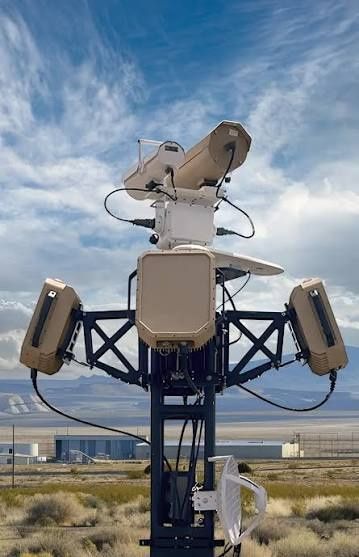
A radar unit normally contains a transmitter, receiver, processing hardware, and communication interfaces. The transmitter sends electromagnetic waves into a designated area, while the receiver collects reflected signals from objects within its detection range.
Software analyzes characteristics of the returned signals. A moving object can produce a measurable change in the signal, allowing radar based intrusion detection to distinguish movement from a static background.
Depending on the system design, detection information can be displayed on a monitoring interface or passed to another security technology. This can allow radar perimeter security to work alongside cameras, access controls, alarms, and other detection devices.
Common Applications
Radar perimeter systems can be used in environments where broad outdoor monitoring is required. Typical applications include:
- Industrial perimeter security around manufacturing and processing facilities.
- Transportation infrastructure such as ports, airports, and rail facilities.
- Energy facilities and utility infrastructure.
- Large outdoor storage and logistics areas.
- Critical infrastructure security systems.
- Military perimeter surveillance systems.
- Restricted or controlled-access sites.
The required radar configuration varies according to terrain, site dimensions, environmental conditions, and the types of movement that need to be identified.
Importance
Perimeter monitoring systems address a basic challenge: detecting movement across large or exposed areas without requiring every section of a boundary to be observed continuously by a person. Large properties can contain open fields, roads, fences, vegetation, buildings, and other features that make continuous visual observation difficult.
Radar perimeter security can provide information about movement before an object reaches a particular physical boundary. This can support situational awareness and give security personnel information about where movement is occurring.
Supporting Outdoor Monitoring
Outdoor perimeter security systems need to operate across changing environmental conditions. Lighting can vary between day and night, while rain, fog, dust, and vegetation can affect some types of sensors.
Radar can detect objects through radio-frequency sensing rather than relying solely on visible imagery. However, radar performance is influenced by factors such as terrain, object characteristics, interference, antenna placement, and system configuration.
Combining Different Detection Technologies
Radar is not necessarily a replacement for cameras or other sensors. Instead, perimeter surveillance systems can combine several technologies to provide different types of information.
For example, radar may detect movement in a defined area, while a camera can provide visual information about the detected object. An integrated system can then present these signals through a common monitoring interface.
This approach is particularly relevant to integrated radar security systems, where multiple detection technologies work together rather than functioning as isolated devices.
Factors Affecting Detection
Several factors influence how a radar detection system performs in a particular environment. These include:
- Detection range and the physical layout of the site.
- Terrain, buildings, trees, and other obstacles.
- Object size, shape, material, and movement.
- Radio-frequency interference.
- Weather and environmental conditions.
- Radar mounting height and orientation.
- Software settings used to define detection zones.
These variables mean that radar specifications should be understood in relation to the environment where a system operates.
| Factor | Relevance to Radar Detection |
|---|---|
| Range | Determines how far movement may be detected |
| Terrain | Can create areas with limited radar visibility |
| Object movement | Helps distinguish moving objects from static surroundings |
| Interference | May affect signal interpretation |
| Mounting position | Influences the area covered by the radar |
| Detection zones | Define areas where alerts or tracking can occur |
| Integration | Determines how radar information connects with other systems |
Recent Updates
From 2024 through 2026, radar perimeter technology has generally moved toward greater integration, digital processing, and automated analysis. Radar devices are increasingly designed to exchange information with cameras, command platforms, access controls, and other sensors.
More Intelligent Detection
Advanced perimeter detection systems increasingly use software to analyze movement patterns rather than simply reporting every detected signal. Intelligent perimeter security systems may classify movement according to characteristics such as direction, speed, location, and trajectory.
This can help distinguish different types of activity, although classification accuracy depends on the system, environment, configuration, and available data. Human oversight can remain important when an event requires contextual interpretation.
AI-Assisted Radar Analysis
AI process techniques are also being incorporated into some radar intrusion detection systems. Machine-learning approaches can analyze large quantities of sensor information and identify patterns that may be difficult to evaluate manually.
AI does not eliminate the possibility of false detections or missed detections. Environmental changes, unusual objects, interference, and incomplete training data can influence automated analysis.
Longer-Range Monitoring
Long range radar security systems continue to be relevant for large properties and open areas. Modern radar designs can provide tracking information across substantial outdoor zones, depending on the specific equipment and operating conditions.
Long-range detection does not necessarily mean that every part of a site will have identical coverage. Buildings, terrain, vegetation, and radar placement can create areas with reduced visibility.
Greater System Integration
Advanced radar intrusion detection systems are increasingly connected with broader security management platforms. A radar alert may be linked with a camera to provide visual confirmation or with mapping software to show the location and direction of movement.
This development supports automated perimeter surveillance, where sensor information can be processed and displayed with limited manual coordination.
Tools and Resources
Understanding radar perimeter security involves more than examining the radar unit itself. Site planning, detection-zone design, mapping, signal analysis, and system integration are also relevant.
Planning and Mapping Resources
Site maps and geographic information tools can help illustrate the physical area being monitored. Basic planning templates can record radar positions, expected detection zones, physical barriers, terrain features, and nearby structures.
Common planning resources include:
- Site maps for identifying physical boundaries.
- Coverage diagrams for documenting detection areas.
- Equipment documentation explaining radar specifications.
- Installation guidelines describing mounting considerations.
- Maintenance checklists for recording inspection activities.
- Incident logs for documenting detected events and responses.
Standards and Technical References
Technical standards organizations and regulatory authorities publish information related to radio-frequency equipment, electromagnetic compatibility, communications, and infrastructure protection. Manufacturer documentation can also explain operating frequencies, detection characteristics, environmental ratings, and integration interfaces for particular radar equipment.
For organizations planning complete radar perimeter security systems, documentation should be reviewed alongside applicable local regulations and site requirements.
Monitoring and Analysis Platforms
Perimeter monitoring systems may include centralized dashboards that display radar tracks, alerts, maps, and information from other sensors. Some platforms can connect radar with video management, access control, and event-recording systems.
The appropriate configuration depends on the site's physical characteristics, operational requirements, privacy considerations, and technical environment.
FAQs
What are radar perimeter systems used for?
Radar perimeter systems are used to detect and monitor movement across outdoor areas. They can be applied to industrial sites, infrastructure facilities, transportation locations, restricted areas, and large properties.
How do perimeter radar security systems work?
Perimeter radar security systems transmit radio-frequency signals and analyze reflected signals from objects. Processing software can use these changes to estimate information such as movement, direction, distance, or speed.
Are radar intrusion detection systems affected by weather?
Radar can continue detecting objects under conditions that may reduce the effectiveness of some visual sensors. However, performance can still be influenced by environmental conditions, terrain, interference, and the characteristics of objects being detected.
What is the role of AI in radar based intrusion detection?
AI can help analyze radar data and identify movement patterns or classify detected objects. Its performance depends on the data, algorithms, system configuration, and operating environment.
Where are critical infrastructure security systems used?
Critical infrastructure security systems can be used around facilities such as energy installations, transportation infrastructure, communications facilities, utilities, and other locations where physical protection and monitoring are important.
Conclusion
Radar perimeter systems use radio-frequency sensing to detect and monitor movement across outdoor areas. They can form part of perimeter intrusion detection systems and can work alongside cameras, access controls, and other sensors. Recent developments have focused on digital processing, automated analysis, AI-assisted detection, longer-range monitoring, and greater system integration. Their effectiveness depends on factors such as terrain, equipment configuration, environmental conditions, interference, and the design of the monitored area.