Smart Security Systems: An Overview of Modern Protection Technologies
Smart security systems combine connected devices, sensors, cameras, software, and communication networks to monitor and manage security-related activities.
Unlike traditional systems that may operate as separate components, a smart security system can connect multiple devices and allow information to move between them. These technologies are used in homes, offices, commercial buildings, industrial sites, and other environments.
The development of smart security systems comes from the broader growth of the Internet of Things (IoT), wireless communication, digital cameras, and mobile applications. Earlier home security systems commonly relied on standalone alarms, locks, or wired cameras. Modern systems can combine these functions into connected networks that can be monitored through computers, tablets, or smartphones.
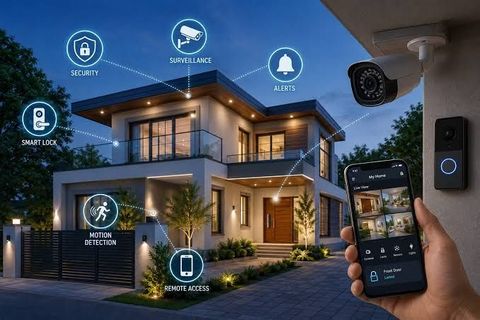
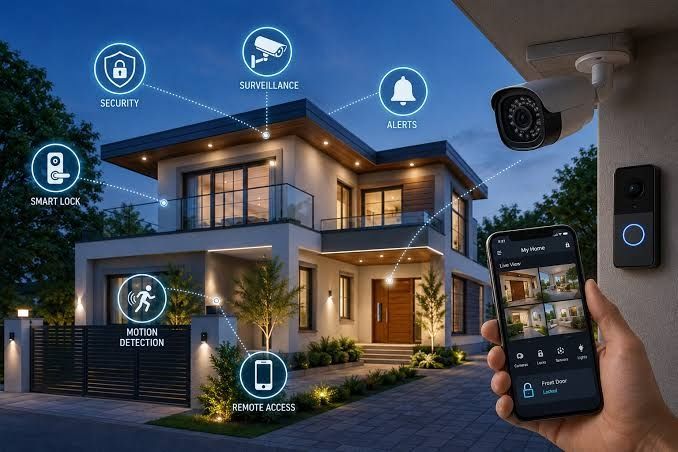
Smart home security systems generally focus on residential environments. They may include smart security cameras, door and window sensors, motion detectors, smart locks, alarms, video doorbells, and environmental sensors. Wireless security systems can communicate through technologies such as Wi-Fi, Bluetooth, or other wireless protocols, reducing the need for extensive physical cabling.
Main Components of Smart Security
A connected security environment can contain several types of equipment:
- Smart security cameras that capture and transmit video.
- Motion sensors that detect movement within a defined area.
- Smart alarm systems that generate alerts when configured conditions occur.
- Smart access control systems that manage entry through electronic locks, credentials, codes, or other authentication methods.
- Sensors that monitor doors, windows, glass, or environmental conditions.
- Central applications or control panels that organize information from connected devices.
Home surveillance systems can combine several of these components. In commercial environments, video surveillance systems and access controls may be connected with monitoring platforms and other building technologies.
From Standalone Devices to Integrated Systems
Traditional security equipment often worked independently. Modern integrated security systems can connect cameras, alarms, access controls, and sensors through a common network or management platform.
This integration can make information easier to organize. For example, a door sensor can detect an event while a nearby camera records activity, allowing the two pieces of information to be considered together.
Importance
Security technologies affect households, workplaces, educational facilities, retail buildings, warehouses, and public spaces. Their primary purpose is to observe defined areas, control access, identify events, and provide information that can support an appropriate response.
Residential security systems can help occupants monitor entrances, windows, outdoor areas, and other locations around a property. Commercial security systems may cover larger spaces and can include access control, video monitoring, alarm systems, and centralized management.
Monitoring Homes and Buildings
Smart security cameras allow users to view video from selected locations, depending on the device and network configuration. Some systems can also detect movement or classify certain types of activity using software-based analysis.
Automated security monitoring systems can generate notifications when predefined conditions occur. However, an alert does not automatically establish what happened. Environmental conditions, incorrect settings, connectivity problems, or other factors can affect the information produced by a security device.
Managing Access
Smart access control systems use electronic methods to manage entry. These can include PIN codes, mobile credentials, electronic cards, biometric authentication, or other approved methods.
In a residential environment, access control may be used for doors or gates. Enterprise security systems may use more structured access policies, with different permissions assigned to different users or locations.
Privacy and Cybersecurity
Connected security devices collect information that can be sensitive, particularly when cameras or microphones are involved. Video recordings, account details, device information, and network data can create privacy considerations.
NIST research published in 2025 found that smart-home users had different security and privacy perceptions depending on the type of device they used. The research also emphasized the importance of user education and understanding how connected devices handle information.
Security therefore involves more than physical equipment. Account authentication, software updates, network configuration, device permissions, and data management are also relevant parts of an intelligent security system.
Recent Updates
Between 2024 and 2026, smart security technology has increasingly focused on interoperability, cybersecurity, AI-assisted analysis, and integration between different connected devices. These developments are gradually changing how residential and commercial security environments are designed.
Expansion of Connected Security Standards
Interoperability has become an important area of smart-home development. Matter, an industry connectivity standard, expanded its supported device categories and capabilities during this period. Matter 1.5 introduced support for cameras and additional device categories, extending the range of equipment that can participate in compatible smart-home environments.
Earlier Matter updates also included security and infrastructure improvements intended to support connected-home deployments.
This type of standardization can reduce dependence on isolated device ecosystems, although compatibility still depends on individual hardware, software, and platform support.
AI-Assisted Video Analysis
AI-based features are increasingly appearing in advanced smart surveillance systems. Instead of simply recording video, some systems can analyze visual information to identify patterns or distinguish between different types of movement.
These capabilities may help organize large amounts of recorded footage. They can also introduce questions about accuracy, privacy, data retention, and human oversight. AI-generated classifications should therefore be understood as system outputs rather than unquestionable determinations.
Greater Attention to Network Security
Connected cameras, locks, sensors, and alarms depend on networks that can create additional cybersecurity considerations. NIST published recommended cybersecurity requirements for consumer-grade routers in 2024, recognizing the importance of router security in environments containing connected home devices.
NIST also published research on methods for characterizing the network behavior of IoT devices, which can help organizations understand what devices communicate across a network and apply appropriate access controls.
| Technology Area | Common Function | Current Development Direction |
|---|---|---|
| Smart cameras | Video capture and monitoring | AI-assisted analysis and interoperability |
| Smart alarms | Event notification | Connected alerts and automation |
| Access control | Entry management | Digital credentials and integrated systems |
| Wireless security systems | Device communication | Broader connected-device integration |
| Video surveillance systems | Visual monitoring | Networked storage and intelligent analysis |
| Integrated security systems | Centralized management | Cross-device coordination |
| Enterprise security systems | Large-scale protection management | Greater network and data integration |
Tools and Resources
Several resources can help people understand, plan, or evaluate smart security technologies. The appropriate resource depends on whether the focus is a residence, commercial property, enterprise environment, or connected-device network.
Planning and Assessment Resources
Security planning templates can help document doors, windows, cameras, sensors, access points, and areas requiring monitoring. Basic floor plans can also be used to identify where devices are positioned and which areas they cover.
Useful planning materials include:
- Property floor-plan templates for mapping device locations.
- Device inventories for recording cameras, sensors, locks, and alarms.
- Access-control lists for documenting authorized users and permissions.
- Network diagrams for showing how connected devices communicate.
- Privacy checklists for reviewing cameras, microphones, recordings, and account access.
Cybersecurity and Smart-Home Resources
NIST provides publications covering consumer IoT cybersecurity, router security, network behavior, and smart-home privacy. These resources can help explain security concepts without requiring advanced technical knowledge.
The Connectivity Standards Alliance provides information about Matter and its development, including the expansion of supported smart-home device categories.
Device documentation is also important because configuration options vary between products. Users can consult documentation for information about authentication, software updates, data storage, account permissions, connectivity, and supported integrations.
FAQs
What are smart security systems?
Smart security systems are connected security technologies that combine devices such as cameras, sensors, alarms, locks, and software. They can monitor selected areas, manage access, and communicate information through a connected network.
How do smart home security systems work?
Smart home security systems generally use sensors and connected devices to detect defined events. Information can be processed by a local control unit, cloud platform, mobile application, or another compatible system, depending on the architecture.
Are wireless security systems secure?
Wireless security systems can use authentication, encryption, network controls, and software updates to protect communications. Their security depends on the design and configuration of the devices, network, accounts, and associated software.
What is the difference between smart security cameras and traditional cameras?
Smart security cameras can include network connectivity, remote viewing, motion detection, notifications, and software-based analysis. Traditional cameras may primarily capture video without the same level of connected functionality.
What are integrated security systems?
Integrated security systems connect multiple security functions, such as video surveillance, alarms, access control, and sensors. The level of integration varies according to the equipment, software, communication protocols, and system architecture.
Conclusion
Smart security systems combine connected hardware and software to monitor environments, manage access, and organize security-related information. Smart home security systems commonly focus on residential monitoring, while commercial and enterprise systems can cover larger and more complex environments. Recent developments have emphasized interoperability, AI-assisted video analysis, cybersecurity, and integration between connected devices. Privacy, network protection, configuration, and appropriate human oversight remain important considerations when using intelligent security technologies.