Booster Pump Systems for Reliable Water Pressure
Booster pump systems are used to increase and maintain water pressure when the available supply does not provide sufficient pressure for downstream requirements.
They are commonly installed in residential buildings, commercial facilities, industrial plants, irrigation networks, and water distribution systems.
A typical booster pump system combines one or more pumps with pressure sensors, controls, valves, piping, and related components. Depending on the application, the system can operate at a constant speed or automatically adjust pump speed as water demand changes.
What Are Booster Pump Systems?
A booster pump system is a pumping arrangement designed to increase water pressure within a distribution network. The system receives water from an existing source and raises its pressure before directing it toward fixtures, equipment, storage areas, or other points of use.
The system does not normally create an independent water supply. Instead, it adds energy to water that is already available from a source such as a municipal line, storage tank, reservoir, or process-water system.
Booster systems can use a single pump or multiple pumps. The configuration depends on required flow, pressure, building height, demand patterns, and operating conditions.
Why Water Pressure Matters
Water pressure determines how effectively water can move through a distribution system. Insufficient pressure can result in reduced flow at downstream fixtures and equipment.
In taller buildings, pressure must also overcome elevation differences. A booster system can compensate for pressure losses caused by elevation, long pipe runs, fittings, valves, and other forms of hydraulic resistance.
Maintaining an appropriate pressure range can help water distribution systems respond to changing demand without relying on manual pump adjustments.
How Booster Pump Systems Work
1. Water Enters the System
Water enters the booster arrangement through an inlet connected to the available supply. The inlet may connect to a storage tank, reservoir, municipal supply, or process-water line.
2. Pressure Is Monitored
Pressure sensors measure conditions at the inlet, discharge, or selected points within the network. The control system uses these measurements to determine whether additional pumping capacity is needed.
3. Pump Starts or Adjusts Speed
When pressure falls below the configured operating range, the controller can start a pump. In a variable-speed system, it can increase or decrease motor speed according to demand.
4. Water Pressure Increases
The pump transfers mechanical energy to the water. The resulting pressure increase depends on pump characteristics, flow rate, operating speed, and system resistance.
5. Pressurized Water Moves Downstream
The pressurized water flows through the discharge piping toward the required points. The system continuously responds to changes in water demand.
6. Pump Operation Changes
When demand decreases, the controller can reduce pump speed or stop individual pumps. In a multi-pump system, pumps can be started or stopped in stages to match changing requirements.
Types of Booster Pump Systems
Single-Pump Systems
A single-pump booster system uses one pumping unit. It can be used where water demand remains relatively consistent or where the required flow range is limited.
The system may include pressure controls, sensors, valves, and a pressure tank.
Multi-Pump Systems
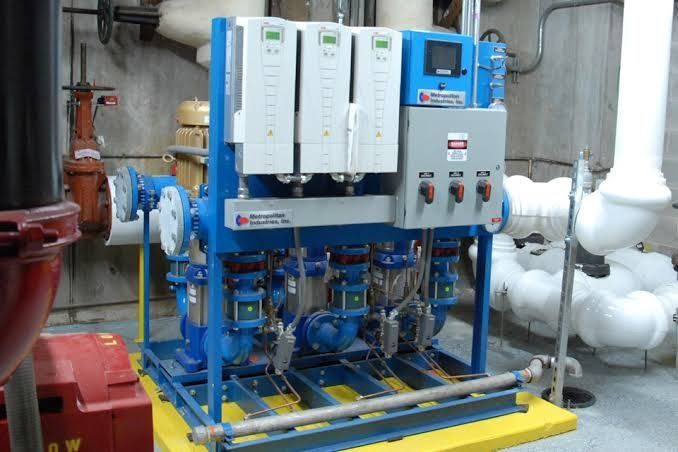
Multi-pump systems use several pumps connected to a common piping arrangement. Pumps can operate individually or together depending on water demand.
This configuration allows the pumping capacity to change as demand varies.
Constant-Speed Systems
Constant-speed booster pumps operate at a fixed rotational speed. Pressure control is commonly achieved by starting and stopping pumps as demand changes.
Variable-Speed Systems
Variable-speed booster systems use variable-frequency drives or integrated electronic controls to change pump speed.
When demand rises, pump speed can increase. When demand falls, speed can decrease, allowing the system to respond more closely to changing flow requirements.
Multistage Booster Pump Systems
Multistage pumps use multiple impeller stages within a single pump assembly. Each stage contributes additional energy to the water, allowing the pump to generate higher pressure.
These systems can be used in applications where substantial pressure increase is required.
Comparison of Booster Pump Systems
| System Type | Operating Method | Typical Application |
|---|---|---|
| Single pump | One pump | Smaller or relatively consistent demand |
| Multi-pump | Multiple pumps | Variable or higher demand |
| Constant speed | Fixed motor speed | Basic pressure boosting |
| Variable speed | Adjustable motor speed | Changing water demand |
| Multistage | Multiple impeller stages | Higher pressure requirements |
Main Components of a Booster Pump System
Booster Pumps
The pump is the primary component responsible for increasing water pressure. Pump selection depends on required flow, pressure, water characteristics, and system layout.
Electric Motors
Electric motors provide mechanical power to the pumps. Motor capacity is selected according to the pump's operating requirements.
Pressure Sensors
Pressure sensors continuously or periodically measure water pressure. Their signals can be sent to the controller for automatic operation.
Control Panel
The control panel manages pump starting, stopping, speed adjustment, alarms, and other operating functions.
Variable-Frequency Drives
A variable-frequency drive changes motor speed by controlling the electrical frequency supplied to the motor. It is commonly used in variable-speed booster systems.
Pressure Tanks
A pressure tank stores a volume of pressurized water. Depending on the system configuration, it can reduce frequent pump starts and help stabilize pressure.
Check Valves
Check valves help prevent reverse water flow when a pump stops or when pressure conditions change.
Isolation Valves
Isolation valves allow individual pumps or sections of piping to be separated for inspection and maintenance.
Manifolds and Piping
Suction and discharge manifolds connect pumps within multi-pump arrangements. Proper piping configuration is important for maintaining suitable flow conditions.
Factors That Affect Water Pressure
Building Height
Water must overcome the static pressure associated with elevation. Higher buildings generally require greater pressure at lower levels to provide adequate pressure at upper floors.
Pipe Length
Long piping networks create friction losses. These losses increase the pressure that the pumping system must provide.
Pipe Diameter
Smaller pipe diameters can create higher flow resistance. Pipe sizing therefore influences the pressure required from the booster system.
Number of Fixtures
Simultaneous water use affects the required flow rate. A building with many fixtures operating at the same time may require greater pumping capacity.
Flow Demand
Demand can vary throughout the day. Variable-speed and multi-pump systems can respond to these changes more dynamically than simple fixed-speed arrangements.
Water Temperature and Characteristics
Water temperature and other fluid properties can influence hydraulic behavior and pump operating conditions.
Applications of Booster Pump Systems
Residential Buildings
Booster systems can help maintain water pressure in homes and residential buildings where incoming pressure is insufficient.
Commercial Buildings
Office buildings, hotels, hospitals, shopping facilities, and educational buildings can use booster systems to distribute water across multiple floors and zones.
Industrial Facilities
Industrial plants may require pressurized water for process equipment, cooling systems, cleaning operations, production processes, and utility networks.
Irrigation
Booster pump systems can provide the pressure needed for sprinkler networks, agricultural irrigation, landscaping, and other water distribution applications.
Water Distribution Networks
Booster systems can help move water through distribution networks where elevation changes or hydraulic losses reduce available pressure.
Fire Protection
Some fire protection systems incorporate dedicated pumping arrangements to maintain the pressure required by the system design and applicable regulations.
Automation and Monitoring
Modern booster pump systems can use sensors, controllers, variable-frequency drives, and communication interfaces to automate operation.
A control system can monitor pressure, flow, pump status, motor conditions, alarms, and operating hours. In multi-pump arrangements, automatic sequencing can distribute operation among available pumps.
Some systems can also communicate operating information to building management or industrial monitoring platforms.
Maintenance Requirements
Regular maintenance helps keep booster pump systems operating consistently. Pumps, motors, valves, pressure sensors, piping, electrical connections, control panels, and pressure tanks should be inspected according to equipment requirements.
Operators should watch for unusual vibration, excessive noise, water leakage, pressure fluctuations, frequent cycling, and changes in pump performance.
Strainers and filters, when installed, should be inspected and cleaned at appropriate intervals. Pressure tank conditions should also be checked according to the tank manufacturer's requirements.
Common Operating Problems
Low Discharge Pressure
Low pressure can result from insufficient pump capacity, excessive system demand, blocked strainers, pipe restrictions, incorrect control settings, or pump wear.
Frequent Pump Cycling
Repeated starting and stopping can occur because of incorrect pressure settings, an improperly configured pressure tank, small system volume, or changing demand.
Excessive Noise or Vibration
Noise or vibration can be associated with mechanical imbalance, poor alignment, inadequate inlet conditions, worn components, or other hydraulic and mechanical problems.
Pump Running Without Adequate Water
Operating without sufficient water can cause damage to some pump configurations. Appropriate dry-run protection and inlet monitoring can help prevent this condition.
Safety Considerations
Booster pump systems combine electrical equipment, pressurized water, rotating machinery, and automatic controls. Appropriate isolation procedures should be followed before maintenance or inspection.
Before opening piping or pump components, the relevant section should be isolated and depressurized. Electrical work should be performed by qualified personnel using appropriate electrical safety procedures.
Automatic systems should also be protected against conditions such as excessive pressure, motor overload, dry running, and abnormal operating temperatures where applicable.
Frequently Asked Questions
What is a booster pump system used for?
A booster pump system increases water pressure when the available supply pressure is insufficient for downstream fixtures, equipment, or distribution requirements.
How does a booster pump maintain water pressure?
Pressure sensors monitor the system, while a controller starts, stops, or adjusts pump operation according to configured pressure and flow conditions.
What is the difference between a single-pump and multi-pump system?
A single-pump system uses one pumping unit, while a multi-pump system uses several pumps that can operate individually or together as water demand changes.
Are variable-speed booster pumps suitable for changing demand?
Variable-speed systems can adjust pump speed according to demand, making them suitable for applications where water consumption changes throughout the day.
What maintenance does a booster pump system require?
Maintenance can include inspecting pumps, motors, valves, pressure sensors, piping, electrical connections, control equipment, and pressure tanks, along with checking for leaks, vibration, and abnormal pressure changes.
Conclusion
Booster pump systems provide a practical method for increasing and maintaining water pressure across residential, commercial, industrial, irrigation, and distribution applications. Their operation combines pumps, motors, sensors, controls, valves, piping, and other components to respond to changing water requirements.
Single-pump, multi-pump, constant-speed, variable-speed, and multistage configurations serve different hydraulic requirements. Proper system sizing, pressure control, monitoring, maintenance, and safety procedures are important for consistent operation and reliable water distribution.