Partial Discharge Test Systems: An Overview of Testing Methods and Applications
Partial discharge is a localized electrical discharge that occurs within or across part of an insulation system without completely bridging the insulation between conductors.
It can occur in equipment exposed to electrical stress, including transformers, cables, rotating machines, switchgear, and other high-voltage assets. Partial discharge test systems are designed to detect, measure, and analyze these small electrical events.
The subject developed alongside high-voltage engineering and electrical insulation testing. As electrical networks became larger and equipment operated at higher voltages, identifying insulation weaknesses became an important part of electrical testing. Partial discharge testing equipment provides a way to examine insulation behavior under controlled conditions and can also be used for monitoring equipment while it remains in operation.
Modern partial discharge measurement systems can use electrical sensors, coupling devices, measuring instruments, software, and data-processing methods. Depending on the application, systems may measure discharge activity during an offline test or monitor equipment during normal operation.
What Partial Discharge Indicates
Partial discharge can be associated with localized weaknesses such as voids, surface irregularities, contamination, aging, or defects in insulation. The presence of a discharge does not by itself establish the severity or remaining life of an asset. Interpretation normally considers the magnitude, repetition pattern, phase relationship, location, operating conditions, and historical measurements.
Electrical insulation testing equipment can therefore be used alongside other diagnostic methods. Results can help technical personnel understand insulation behavior and determine whether additional investigation is appropriate.
Main Testing Approaches
Partial discharge detection systems generally use several approaches depending on the asset and testing environment. Electrical measurement is commonly associated with charge-based testing, while other approaches can use electromagnetic, acoustic, or optical signals for detection or location.
The following table summarizes several common approaches:
| Testing approach | Typical application | Main purpose |
|---|---|---|
| Offline electrical measurement | Laboratory and equipment testing | Measure PD under controlled conditions |
| Online electrical monitoring | Transformers, motors, generators | Observe PD during operation |
| UHF detection | GIS and some transformer applications | Detect high-frequency electromagnetic activity |
| Acoustic detection | Transformers and other equipment | Assist with locating discharge activity |
| Cable PD testing | Medium- and high-voltage cables | Assess insulation condition and locate defects |
IEC 60270 provides requirements and guidance for charge-based partial discharge measurements, including measuring quantities, test circuits, calibration, digital and analogue methods, and approaches for distinguishing discharge activity from external interference.
Importance
Partial discharge testing matters because electrical insulation is an important part of equipment that operates at elevated voltage. Insulation separates conductive components and helps equipment operate within its intended electrical conditions. Changes within an insulation system can influence equipment behavior and may require further investigation.
Partial discharge measurement systems are used in manufacturing, laboratories, utilities, industrial facilities, and electrical maintenance programs. The information obtained can contribute to electrical asset condition monitoring when interpreted together with other available evidence.
Supporting Insulation Assessment
High voltage testing equipment can be used during controlled tests to examine how insulation behaves when electrical stress is applied. Partial discharge activity may provide information about localized insulation conditions that may not be apparent from a general visual inspection.
High voltage insulation testing can involve several different methods. Partial discharge testing is one diagnostic technique rather than a complete assessment of every aspect of an electrical asset.
Transformer and Cable Applications
Transformer partial discharge testing can examine insulation structures within transformers and related components. Measurements may be performed during factory testing or as part of field diagnostics, depending on the equipment and testing objective.
Cable partial discharge testing equipment is used for evaluating cable insulation and accessories. Cable systems can contain joints and terminations where electrical stress may become concentrated, so testing may include both detection and location techniques.
Online and Offline Testing
Offline testing normally requires the equipment or circuit to be removed from normal operation and connected to a suitable testing arrangement. This can provide controlled conditions for measurement.
Online partial discharge monitoring is performed while an asset remains energized and operating under defined conditions. It can provide information about changes in PD activity over time, although operating conditions and background interference need to be considered during interpretation.
Practical Challenges
Partial discharge signals can be small and may be affected by electrical interference, radio-frequency activity, switching events, or other sources of noise. The physical arrangement of sensors and measuring equipment can also influence results.
For this reason, partial discharge monitoring systems normally require appropriate calibration, signal processing, noise separation, and interpretation. A measurement should be considered within the context of the equipment, test conditions, and historical data rather than treated as an isolated number.
Recent Updates
Developments from 2024 through 2026 have included updated measurement standards, greater attention to online monitoring, and expanded testing methods for equipment using modern power-electronic systems.
One significant development was the publication of IEC 60270:2025, the fourth edition of the international standard for charge-based partial discharge measurement. It revised the earlier edition and includes updated provisions concerning measurement methods, calibration, test procedures, digital techniques, and interference discrimination.
New Considerations for Power Electronics
IEC TS 61934:2024 addresses offline electrical measurement of partial discharge in insulation systems exposed to short-rise-time and repetitive voltage impulses from power electronics. Its applications include equipment such as motors, inductive reactors, wind turbine generators, and power-electronic modules.
This reflects a broader change in electrical equipment, where power converters and rapidly switching devices can create voltage conditions that differ from conventional sinusoidal operation. Advanced partial discharge measurement equipment therefore needs to account for the electrical environment in which an insulation system operates.
Expansion of Online Monitoring
Online partial discharge monitoring continues to receive attention for transformers, generators, motors, cable systems, and other electrical assets. Monitoring systems can combine PD measurements with information such as temperature, load, vibration, or other asset parameters to provide broader condition information.
Recent technical work has also addressed rotating machines. IEC TS 60034-27-6:2026 covers online electrical detection and monitoring of partial discharges in motors and generators whose windings are supplied from converters.
Digital Analysis and Automated Testing
Automated partial discharge test systems increasingly combine measurement hardware with software for data acquisition, visualization, signal processing, and reporting. Digital processing can help distinguish relevant patterns from background activity and organize measurements for comparison.
Industrial partial discharge monitoring systems can also support longer-term data collection. This allows changes in measured activity to be examined over time rather than relying only on a single test.
Tools and Resources
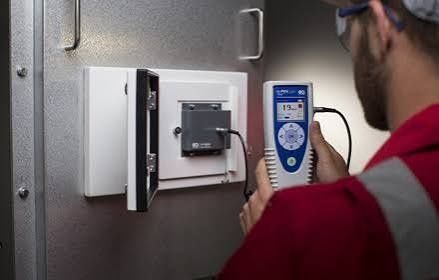
Partial discharge testing involves a combination of measurement instruments, sensors, calibration equipment, software, and technical documentation. The appropriate configuration depends on the asset, voltage level, test environment, and measurement objective.
Testing and Measurement Resources
Common resources include:
- Partial discharge test equipment for controlled laboratory and field measurements.
- High voltage diagnostic equipment for electrical asset testing.
- Coupling devices and sensors for collecting discharge signals.
- Calibration instruments for establishing measurement references.
- Data-acquisition software for recording and displaying measurements.
- Signal-processing tools for separating PD activity from interference.
- Test documentation and standardized procedures for recording conditions and results.
Technical standards are particularly important because measurement methods can vary according to the equipment being tested. IEC 60270:2025 provides a central reference for charge-based PD measurements, while equipment-specific standards may address particular asset types.
Monitoring and Diagnostic Resources
Transformer insulation diagnostic systems can combine electrical measurements with other diagnostic information. Similar approaches can be used for motors, generators, cables, and switchgear.
Complete partial discharge diagnostic systems may combine sensors, acquisition hardware, software, calibration equipment, and analysis functions. The purpose is to create a measurement chain in which the signal can be captured, processed, documented, and interpreted in relation to the equipment being examined.
FAQs
What are partial discharge test systems used for?
Partial discharge test systems are used to detect and measure localized electrical discharge activity in insulation systems. They can be used during controlled testing or, in suitable configurations, for monitoring energized equipment.
What is partial discharge testing equipment?
Partial discharge testing equipment includes instruments and associated components used to detect, measure, and analyze PD signals. Depending on the application, this may include sensors, coupling devices, acquisition units, calibration equipment, and software.
How does online partial discharge monitoring work?
Online partial discharge monitoring uses sensors and measurement equipment connected to an energized asset to detect PD activity during normal operation. The collected data can be examined for patterns and changes while considering operating conditions and background interference.
What is transformer partial discharge testing?
Transformer partial discharge testing examines discharge activity associated with transformer insulation and related components. Electrical, electromagnetic, and acoustic techniques may be used depending on the transformer design and testing objective.
Why is calibration important in partial discharge measurement systems?
Calibration helps establish a known measurement reference and supports consistency between measurements. Standards such as IEC 60270 include requirements concerning calibration and measuring instruments.
Conclusion
Partial discharge test systems provide methods for detecting and analyzing localized electrical discharge activity in insulation systems. Applications include transformer testing, cable diagnostics, rotating machines, laboratory evaluation, and online electrical asset condition monitoring. Recent developments have placed greater attention on digital measurement, online monitoring, power-electronic insulation systems, and updated testing standards. Results from partial discharge testing are generally interpreted together with test conditions, historical measurements, and other diagnostic information.