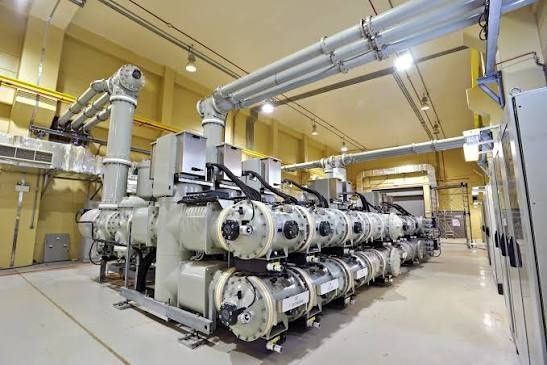
Gas Insulated Switchgear Guide to Design, Components, and Applications
Gas insulated switchgear is electrical equipment used to control, protect, and isolate parts of an electrical power system.
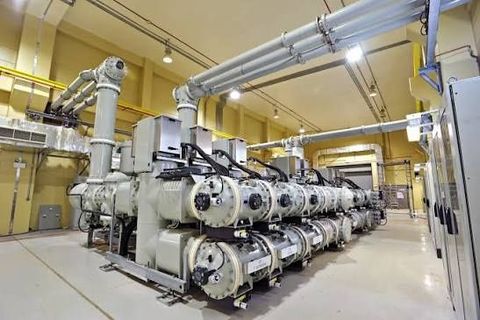
Unlike conventional air-insulated equipment, gas insulated switchgear uses an insulating gas within a sealed enclosure around components that carry or control electrical current. This arrangement allows several functions to be combined within a compact installation.
Gas insulated switchgear systems developed as power networks required equipment that could operate reliably in locations where space was limited. GIS switchgear can be found in substations, power generation facilities, industrial sites, and electrical distribution networks. Its enclosed construction separates energized components from the surrounding environment.
A typical GIS installation may include circuit breakers, disconnectors, earthing switches, busbars, current transformers, voltage transformers, and cable or line connections. Together, these components form part of a coordinated electrical system for switching and protection.
How Gas Insulated Switchgear Works
The basic principle is relatively straightforward. Electrical conductors and switching components are placed inside grounded metal enclosures, while an insulating gas provides electrical separation between energized parts and the enclosure.
When a circuit breaker opens, it interrupts the flow of current under specified operating conditions. Disconnectors can isolate sections of equipment, while earthing switches provide a controlled connection to ground when equipment needs to be made safe for maintenance.
High voltage gas insulated switchgear commonly uses a modular arrangement in which different functional sections are connected to form a complete switching system. The exact configuration depends on voltage level, network design, protection requirements, and installation conditions.
Main Components
The major components found in gas insulated electrical equipment can include:
- Circuit breakers for interrupting electrical current.
- Busbars for connecting multiple electrical circuits.
- Disconnectors for isolating sections of the installation.
- Earthing switches for connecting isolated equipment to ground.
- Current and voltage transformers for measurement and protection functions.
- Cable and overhead-line terminations for network connections.
- Gas compartments and monitoring equipment for maintaining the intended insulation environment.
The enclosure provides mechanical protection and helps maintain controlled internal conditions around the electrical components.
Importance
Gas insulated switchgear matters because electrical networks need equipment that can switch circuits, isolate faults, and manage connections between different parts of the power system. These functions support electricity transmission and distribution for homes, businesses, transport systems, industrial facilities, and public infrastructure.
GIS switchgear is particularly relevant where available land is restricted. Its enclosed construction can allow electrical equipment to be arranged in a more compact space than comparable air-insulated arrangements, although the final footprint depends on the system configuration and surrounding infrastructure.
Applications in Power Networks
Gas insulated substation equipment can be used at different points within an electrical network. High voltage GIS systems are commonly associated with transmission and large substation applications, while medium voltage GIS switchgear can be used in distribution and industrial environments.
Typical applications include:
- Electrical substations.
- Power generation facilities.
- Transmission networks.
- Urban electrical distribution.
- Industrial plants.
- Renewable energy connection points.
- Large commercial and infrastructure facilities.
Industrial gas insulated switchgear may also be integrated with other equipment such as transformers, protection systems, control panels, and power cables.
Design Considerations
Designing a GIS installation involves several technical factors. The rated voltage and current influence the selection of switching and insulation components, while fault levels affect the required interruption and withstand capabilities.
Physical layout is another consideration. Engineers need to account for cable routes, access areas, expansion requirements, grounding arrangements, control connections, and environmental conditions.
Gas management is also important because the insulation medium must remain within specified operating conditions. Monitoring systems can be used to identify changes in pressure or density and provide information for inspection and maintenance.
Comparison With Air-Insulated Equipment
The main difference between GIS electrical switchgear and conventional air-insulated equipment is the environment around the energized components. Air-insulated systems rely primarily on atmospheric air and generally require greater physical separation between conductors.
Gas insulated systems place components inside sealed enclosures with an insulating medium. This can change the physical arrangement, environmental exposure, maintenance approach, and space requirements of a substation.
| Feature | GIS Switchgear | Air-Insulated Switchgear |
|---|---|---|
| Insulation environment | Enclosed insulating medium | Atmospheric air |
| Equipment arrangement | Compact enclosed modules | More open arrangement |
| Environmental exposure | Energized parts are enclosed | Equipment is more exposed |
| Space requirements | Often reduced | Generally greater separation |
| Inspection approach | Includes enclosure and gas monitoring | More direct visual inspection |
| Typical applications | Urban, industrial, transmission and specialized substations | Distribution and transmission installations |
The appropriate arrangement depends on electrical, environmental, physical, operational, and regulatory requirements.
Recent Updates
From 2024 through 2026, development in gas insulated switchgear has increasingly focused on environmental considerations, digital monitoring, compact designs, and alternatives to traditional insulating gases. The broader direction is toward reducing the environmental impact of high-voltage equipment while maintaining required electrical performance.
Alternatives to Traditional Insulating Gases
Some modern GIS designs use alternative insulating gas mixtures or other insulation technologies intended to reduce greenhouse-gas impacts associated with certain traditional insulating media. The suitability of an alternative depends on voltage class, equipment design, electrical performance, safety requirements, and applicable standards.
This transition is influencing the development of advanced gas insulated substation systems and high voltage gas insulated power systems. Equipment specifications increasingly need to consider both electrical characteristics and environmental requirements.
Digital Monitoring
Digital sensors and monitoring systems are becoming more closely integrated with GIS installations. These systems can collect information about operating conditions, switching activity, gas density, temperature, and other equipment parameters.
Digital monitoring can support condition assessment by making operational information easier to record and analyze. It does not eliminate the need for appropriate inspection, testing, or maintenance procedures.
Compact and Integrated Systems
Advanced GIS switchgear systems are also being developed with greater integration between switching, measurement, protection, and monitoring functions. Modular designs can simplify the arrangement of high voltage GIS equipment within a substation.
The growing use of renewable generation and changing electricity networks is another factor influencing equipment design. Grid connections may require different configurations depending on generation type, network voltage, available space, and power-flow requirements.
Tools and Resources
Understanding gas insulated switchgear can involve electrical diagrams, equipment specifications, technical standards, and calculation tools. These resources help explain how components are selected and connected within a power system.
Standards and Technical References
Organizations such as the International Electrotechnical Commission and IEEE publish standards and technical information related to electrical equipment and power systems. Manufacturer documentation can also provide component specifications, operating principles, installation information, and maintenance requirements.
Useful resources include:
- Single-line diagrams for understanding electrical connections.
- Equipment datasheets for reviewing ratings and component characteristics.
- Electrical calculation tools for studying voltage, current, and fault conditions.
- GIS layout drawings for understanding physical arrangements.
- Technical standards for identifying applicable testing and performance requirements.
- Maintenance documentation for tracking inspection and operating information.
Learning About GIS Systems
Educational materials can help readers understand terms such as high voltage switchgear systems, gas insulated substation equipment, and industrial GIS power systems. Basic electrical diagrams are particularly useful because they show how circuit breakers, busbars, disconnectors, transformers, and external connections interact.
Simulation and power-system analysis platforms can also be used by engineers and students to study electrical networks. Their appropriate use depends on the intended analysis and the accuracy of the input information.
FAQs
What is gas insulated switchgear?
Gas insulated switchgear is enclosed electrical switchgear in which an insulating gas or alternative insulating medium provides electrical separation around energized components. It is used for switching, isolation, protection, and connection within power systems.
How do gas insulated switchgear systems differ from conventional switchgear?
Gas insulated switchgear systems place major energized components inside grounded enclosures, while conventional air-insulated equipment relies more heavily on atmospheric air and physical separation. GIS installations can therefore use a different physical layout.
Where is high voltage GIS equipment used?
High voltage GIS equipment is used in applications such as transmission substations, power generation facilities, urban substations, and other high-voltage electrical networks where enclosed switching equipment is appropriate.
What components are included in GIS switchgear?
A GIS installation may include circuit breakers, busbars, disconnectors, earthing switches, current transformers, voltage transformers, cable terminations, and gas monitoring equipment. The exact configuration varies according to the electrical system.
What are current developments in advanced GIS switchgear systems?
Current development areas include alternative insulating media, digital condition monitoring, compact equipment arrangements, integrated control systems, and designs that address changing environmental requirements.
Conclusion
Gas insulated switchgear is an enclosed approach to electrical switching and protection that is used across transmission, distribution, generation, and industrial applications. Its main components include circuit breakers, busbars, disconnectors, earthing switches, measurement devices, and controlled insulation compartments. Recent development has placed greater attention on alternative insulating media, digital monitoring, compact layouts, and integration with changing power networks. The design of each GIS installation depends on electrical ratings, physical conditions, protection requirements, applicable standards, and the intended application.