Membrane Food Processing: An Overview of Modern Processing Methods
Membrane food processing uses thin, selective barriers to separate components in liquids and food mixtures.
Instead of relying mainly on heating, evaporation, or mechanical separation, membrane systems allow certain molecules, dissolved substances, or particles to pass through while retaining others. This approach is used in areas such as dairy processing, beverage clarification, water management, and ingredient concentration.
The development of membrane technology is connected to advances in materials science and separation engineering. As membrane materials became more suitable for food applications, manufacturers and researchers began applying filtration principles to liquid food streams. Today, food membrane processing equipment can be integrated into processing lines for concentration, clarification, purification, and separation.
How Membrane Separation Works
A membrane acts as a selective barrier between two streams. Pressure or another driving force moves the liquid through the membrane, while components that cannot pass through remain on the other side.
The liquid that passes through is commonly called the permeate, while the retained stream is called the retentate. The exact separation depends on membrane structure, pore characteristics, pressure, temperature, and the properties of the food material.
Membrane filtration food processing can use several technologies:
- Microfiltration separates relatively large particles, microorganisms, and suspended materials.
- Ultrafiltration retains proteins, colloids, and other larger molecules while allowing smaller dissolved components to pass.
- Nanofiltration provides separation at a smaller molecular scale and can selectively retain certain salts and organic compounds.
- Reverse osmosis uses a dense membrane to separate water from many dissolved substances and is commonly associated with concentration.
Common Food Applications
Food processing membrane systems can be used with milk, whey, fruit liquids, vegetable extracts, beverages, and other liquid products. Dairy membrane filtration systems are particularly associated with separating or concentrating milk proteins and whey components.
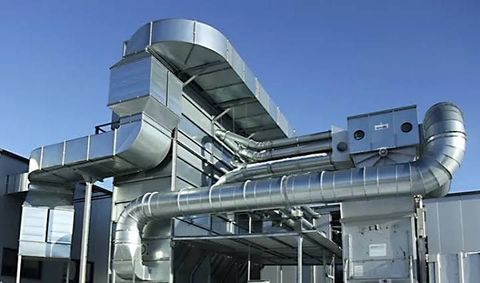
Food grade membrane filtration requires materials and equipment appropriate for contact with food products. Industrial membrane filtration systems can include membrane modules, pumps, pressure controls, sensors, piping, cleaning arrangements, and monitoring equipment.
Importance
Membrane processing matters because food manufacturers often need to separate, concentrate, or clarify liquid ingredients while maintaining specific characteristics. Conventional methods can involve substantial heating or multiple processing stages, whereas membrane filtration provides another approach for handling certain liquid streams.
For consumers, membrane technology can influence the processing of products such as milk ingredients, juices, beverages, and concentrated food components. The technology is also relevant to processors that need controlled separation of proteins, sugars, minerals, water, or suspended particles.
Supporting Controlled Separation
One important characteristic of membrane processing is selective separation. Different membrane types can target different particle or molecule sizes, allowing processors to choose an appropriate method for a particular liquid.
For example, ultrafiltration food processing can concentrate proteins while allowing smaller components to move through the membrane. Reverse osmosis food processing can remove water from a liquid stream, producing a more concentrated retentate.
Applications in Dairy Processing
Dairy processing provides several examples of membrane technology. Dairy membrane filtration systems can be used to concentrate milk proteins, process whey, adjust ingredient composition, and separate components according to their size.
Industrial ultrafiltration systems are often designed around continuous liquid movement through membrane modules. Food processing ultrafiltration equipment may include pumps, pressure sensors, flow meters, temperature controls, and cleaning systems.
Practical Challenges
Membranes can gradually become fouled when proteins, fats, minerals, pigments, or other substances accumulate on their surfaces. Fouling can reduce filtration performance and may require cleaning or changes in operating conditions.
Other considerations include membrane selection, pressure management, temperature, sanitation, product characteristics, and equipment compatibility. Industrial membrane separation systems therefore require process controls that match the particular food stream.
Recent Updates
From 2024 through 2026, membrane food processing has continued to develop alongside broader interest in resource-efficient food production, improved separation control, and digital monitoring. Research and industrial development have focused on membrane materials, system design, fouling management, and integration with other processing technologies.
Advances in Membrane Materials
Recent development has included research into membrane materials with improved selectivity, permeability, chemical resistance, and fouling characteristics. Different polymeric, ceramic, and composite materials can be selected according to the food stream and separation objective.
Advanced membrane processing systems may combine multiple membrane stages rather than relying on one filtration step. A sequence can use microfiltration, ultrafiltration, nanofiltration, or reverse osmosis depending on the desired separation.
Greater Process Monitoring
Digital sensors and control systems are increasingly used to monitor pressure, temperature, flow rate, conductivity, and other operating conditions. These measurements can help operators identify changes in membrane performance and maintain consistent process conditions.
Advanced food membrane filtration equipment may also incorporate automated monitoring and data collection. Such systems can connect membrane operation with broader production management platforms.
Combining Filtration Methods
Another general development is the integration of membrane filtration with other processing techniques. Membrane stages may be combined with thermal treatment, centrifugation, evaporation, or other separation methods when a single technique does not meet the required process conditions.
The choice depends on the composition of the feed liquid, the desired product characteristics, hygiene requirements, and the intended scale of operation.
| Membrane Method | General Separation Role | Common Food Applications |
|---|---|---|
| Microfiltration | Removes larger particles and suspended materials | Beverage clarification, dairy processing |
| Ultrafiltration | Retains proteins and larger molecules | Milk and whey concentration |
| Nanofiltration | Separates smaller dissolved components | Mineral and ingredient separation |
| Reverse osmosis | Separates water from many dissolved substances | Liquid concentration |
Tools and Resources
Understanding membrane processing can involve several technical and educational resources. Process diagrams, filtration calculators, equipment specifications, laboratory testing methods, and technical publications can help explain how membrane systems operate.
Process Design Resources
Useful resources include membrane selection guides, flow diagrams, pressure and flow calculations, and mass-balance worksheets. A basic mass balance can help estimate how much material enters a process and how it is distributed between permeate and retentate streams.
Technical specifications can also provide information about membrane material, operating pressure, temperature limits, filtration area, chemical compatibility, and cleaning requirements.
Monitoring and Testing Tools
Industrial systems may use pressure gauges, flow meters, temperature sensors, conductivity meters, and digital monitoring platforms. Laboratory analysis can help determine protein concentration, solids content, turbidity, acidity, or other characteristics relevant to a particular food stream.
Commercial membrane filtration systems may combine these measurement tools with pumps, valves, membrane modules, and automated controls. Complete industrial membrane processing systems can therefore involve several interconnected components rather than a membrane alone.
Educational Resources
Food science textbooks, university publications, technical standards, equipment manuals, and research journals can provide background information on membrane separation. These resources can help readers understand terminology such as transmembrane pressure, permeate flux, concentration factor, rejection, and membrane fouling.
FAQs
What is membrane food processing?
Membrane food processing uses selective membranes to separate, clarify, purify, or concentrate components in food liquids. Different membrane technologies are selected according to the size and properties of the substances being separated.
How does membrane filtration food processing work?
In membrane filtration food processing, pressure or another driving force moves a liquid through a selective membrane. Some components pass through as permeate, while retained components remain in the retentate.
What is ultrafiltration food processing used for?
Ultrafiltration food processing is commonly used to concentrate proteins and separate larger molecules from smaller dissolved components. It has applications in dairy and other liquid food processes.
What is the difference between ultrafiltration and reverse osmosis food processing?
Ultrafiltration generally separates larger molecules such as proteins from smaller dissolved substances. Reverse osmosis uses a much denser membrane and is primarily used to separate water from many dissolved substances.
What are food processing membrane systems used for?
Food processing membrane systems can support clarification, concentration, purification, and selective separation. Applications include dairy processing, beverage processing, ingredient preparation, and treatment of various liquid food streams.
Conclusion
Membrane food processing uses selective barriers to separate or concentrate components in liquid food streams. Technologies such as microfiltration, ultrafiltration, nanofiltration, and reverse osmosis perform different separation functions. Recent developments have focused on membrane materials, process monitoring, fouling management, and integration with other food processing methods. The technology remains an important part of modern liquid food processing and separation systems.