Zero Liquid Discharge Equipment: Types, Components, and Uses
Zero liquid discharge (ZLD) equipment is used in industrial wastewater treatment systems designed to recover water while minimizing or eliminating liquid wastewater discharge from a process.
These systems typically combine several treatment stages rather than relying on a single piece of equipment.
A ZLD installation may include pretreatment units, filtration systems, reverse osmosis equipment, evaporators, crystallizers, pumps, heat exchangers, and solids-handling equipment. The exact configuration depends on wastewater composition, flow rate, dissolved solids, scaling potential, and water-recovery requirements.
Understanding the types, components, and uses of ZLD equipment helps explain how complex industrial wastewater streams can be treated and concentrated.
What Is Zero Liquid Discharge Equipment?
Zero liquid discharge equipment refers to the collection of treatment technologies used to process wastewater until the remaining liquid is highly concentrated and, in many systems, converted into solid material.
The process generally separates reusable water from dissolved salts and other contaminants. Recovered water can potentially be returned to an industrial process after meeting the required quality specifications.
The concentrated stream is treated further through thermal evaporation and, where required, crystallization. The final solids are then removed for appropriate handling.
How Zero Liquid Discharge Systems Work
A typical ZLD process involves several interconnected stages.
1. Wastewater Collection
Industrial wastewater is collected from process operations and transferred to the treatment system.
The wastewater may contain dissolved salts, suspended solids, organic compounds, metals, chemicals, or other substances depending on the industrial process.
2. Pretreatment
Pretreatment removes materials that could interfere with downstream equipment.
Common processes include clarification, filtration, chemical treatment, softening, pH adjustment, and other contaminant-specific processes.
3. Membrane Treatment
Some ZLD systems use membrane technologies such as reverse osmosis to recover a portion of the water before thermal treatment.
The membrane system separates water from a concentrated reject stream containing a higher concentration of dissolved materials.
4. Concentration
The concentrated reject is sent to an evaporation stage. Heat is applied to remove additional water as vapor.
5. Evaporation
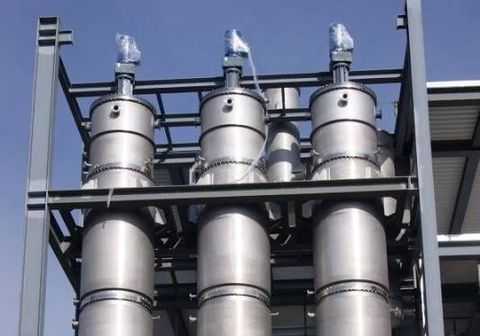
An industrial evaporator removes water from the concentrated stream. Depending on the system, falling film, forced circulation, or other evaporation technologies may be used.
6. Crystallization
When dissolved salts reach sufficiently high concentrations, a crystallizer can convert them into solid crystals.
This stage is particularly important when the remaining liquid cannot be concentrated further through conventional evaporation.
7. Solids Separation
Crystals and other solids are separated from the remaining process stream using equipment such as centrifuges, filters, or other solid-liquid separation technologies.
8. Water Recovery
Water generated through membrane treatment, evaporation, and condensation can be collected and treated further if necessary before reuse.
Main Types of Zero Liquid Discharge Equipment
Pretreatment Equipment
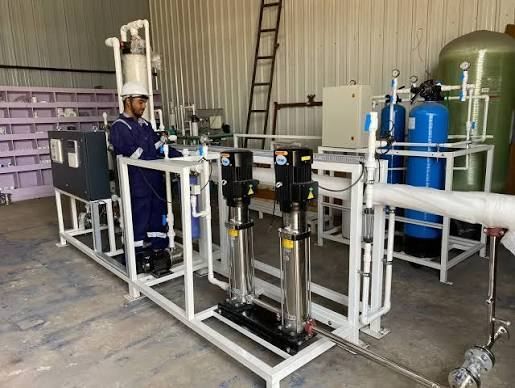
Pretreatment equipment prepares wastewater for downstream processes. It can include clarifiers, filters, softeners, chemical dosing systems, and pH-control equipment.
The specific pretreatment arrangement depends on the contaminants present in the wastewater.
Reverse Osmosis Systems
Reverse osmosis systems use pressure to move water through a semipermeable membrane while retaining many dissolved substances.
In ZLD systems, reverse osmosis can recover a significant portion of incoming water before the remaining concentrate moves to thermal treatment.
Evaporators
Evaporators use heat to remove water from concentrated wastewater.
Common configurations include falling film and forced circulation evaporators. Selection depends on feed concentration, viscosity, scaling behavior, and required concentration levels.
Crystallizers
Crystallizers further concentrate wastewater until dissolved materials form solid crystals.
They are generally used near the final stage of ZLD treatment when the remaining liquid contains high concentrations of dissolved solids.
Solid-Liquid Separation Equipment
Centrifuges, filters, filter presses, and other separation equipment can separate crystallized solids from liquid streams.
Condensers
Condensers convert generated vapor into liquid water. The recovered condensate may be collected and processed for reuse.
Pumps
Different pumps move wastewater, concentrate, chemicals, condensate, and other fluids between treatment stages.
Heat Exchangers
Heat exchangers transfer thermal energy between process streams. They can be used for feed preheating, evaporation, cooling, and heat recovery.
Comparison of Major ZLD Equipment
| Equipment | Primary Function | Typical Position |
|---|---|---|
| Clarifier | Removes suspended material | Pretreatment |
| Filter | Removes particles | Pretreatment |
| Reverse osmosis | Recovers water | Concentration |
| Evaporator | Removes water by heating | Thermal treatment |
| Crystallizer | Forms solid crystals | Final concentration |
| Centrifuge | Separates solids and liquid | Solids handling |
| Condenser | Converts vapor to liquid | Evaporation |
| Heat exchanger | Transfers thermal energy | Multiple stages |
Factors Affecting ZLD Equipment Selection
Wastewater Composition
The chemical composition of wastewater is one of the most important design considerations. Different salts, metals, organics, and suspended materials can affect treatment selection.
Total Dissolved Solids
High dissolved-solids concentrations influence membrane performance, evaporation requirements, crystallization behavior, and scaling potential.
Flow Rate
The volume of wastewater generated determines the required treatment capacity and equipment size.
Scaling Potential
Certain dissolved minerals can form deposits on membranes and heat-transfer surfaces. Pretreatment and process control can help manage scaling.
Energy Requirements
Thermal evaporation and crystallization require significant energy. Heat recovery, multiple-effect evaporation, or vapor recompression may be incorporated into system designs.
Water Recovery Requirements
The desired amount and quality of recovered water influence the number and type of treatment stages required.
Applications of Zero Liquid Discharge Equipment
Power Generation
Power plants can generate wastewater from cooling systems, boiler operations, water treatment, and other processes. ZLD systems can be incorporated where liquid discharge needs to be minimized.
Chemical Processing
Chemical facilities may produce wastewater containing high concentrations of dissolved salts and process chemicals. ZLD equipment can treat selected streams and recover water.
Textile Manufacturing
Textile processes can generate wastewater containing dyes, salts, chemicals, and suspended materials. ZLD systems can be used as part of broader wastewater management strategies.
Pharmaceutical Manufacturing
Pharmaceutical processes can generate complex wastewater streams. Treatment configurations depend on the specific contaminants and water-quality requirements.
Mining and Minerals
Mining and mineral-processing operations can generate high-salinity wastewater and concentrated process streams. ZLD equipment can support water recovery and concentrate management.
Food and Beverage Processing
Certain food-processing operations generate wastewater with elevated organic and dissolved-solid concentrations. ZLD technologies may be applied when water recovery and liquid discharge reduction are required.
Automation and Monitoring
Modern ZLD systems use instrumentation and control systems to monitor pressure, temperature, flow, conductivity, pH, liquid level, and other process variables.
Automated controls can coordinate pumps, valves, membrane systems, evaporators, and crystallizers. Monitoring helps operators identify changes in scaling, concentration, pressure, and heat-transfer conditions.
Data logging can also provide information about water recovery, equipment performance, energy consumption, and process stability.
Energy Management in ZLD Systems
Thermal treatment can represent a significant portion of ZLD energy demand. System designers may use multiple-effect evaporators, mechanical vapor recompression, thermal vapor recompression, and heat exchangers to recover or reuse thermal energy.
Preheating incoming wastewater with recovered heat can reduce the thermal load on evaporation equipment.
The appropriate energy strategy depends on wastewater characteristics, available heat sources, operating pressure, system capacity, and required water recovery.
Maintenance of ZLD Equipment
ZLD systems contain several different technologies, so maintenance requirements vary across each treatment stage.
Membranes may require cleaning when fouling or scaling affects performance. Evaporators and heat exchangers may require periodic cleaning to remove deposits.
Pumps, valves, instruments, centrifuges, filters, condensers, and crystallizers should be inspected according to equipment requirements.
Monitoring pressure differences, conductivity, temperature, flow, and heat-transfer performance can help identify developing operational problems.
Safety Considerations
ZLD systems can involve high temperatures, pressurized equipment, vacuum conditions, chemicals, rotating machinery, and concentrated process streams.
Operators should follow appropriate isolation and depressurization procedures before maintenance. Chemical handling should follow applicable safety procedures and manufacturer instructions.
Thermal equipment should have appropriate pressure-relief and temperature-control systems. Electrical equipment and automated machinery should also be protected according to applicable industrial safety requirements.
Frequently Asked Questions
What is zero liquid discharge equipment used for?
ZLD equipment is used to treat industrial wastewater by recovering water and concentrating dissolved materials until the remaining waste is converted into a concentrated stream or solid form.
What are the main components of a ZLD system?
Major components can include pretreatment equipment, reverse osmosis systems, evaporators, crystallizers, pumps, heat exchangers, condensers, and solid-liquid separation equipment.
Why is reverse osmosis used in ZLD systems?
Reverse osmosis can recover a portion of wastewater as treated water before the remaining concentrated stream enters energy-intensive thermal treatment.
What does a ZLD crystallizer do?
A crystallizer further concentrates a liquid stream until dissolved substances form solid crystals that can be separated from the remaining liquid.
Where is ZLD equipment used?
ZLD equipment can be used in power generation, chemical processing, textiles, pharmaceuticals, mining, minerals processing, and selected food-processing applications.
Conclusion
Zero liquid discharge equipment combines multiple treatment technologies to recover water and concentrate dissolved materials from industrial wastewater. A typical system may integrate pretreatment, membrane separation, evaporation, crystallization, condensation, and solids handling.
The appropriate equipment configuration depends on wastewater composition, flow rate, dissolved-solids concentration, scaling potential, water-recovery objectives, and available energy sources.
Effective monitoring, heat recovery, equipment maintenance, and appropriate safety practices are important for maintaining stable ZLD operations and managing concentrated wastewater streams.