Flexible Capacitive Sensor: An Overview of Design and Applications
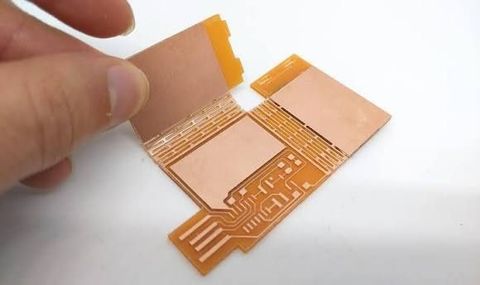
A flexible capacitive sensor is an electronic sensing device designed to detect changes in touch, pressure, proximity, or physical movement while remaining bendable or conformable.
Unlike rigid sensing components, flexible capacitive sensors can be incorporated into curved, soft, or moving surfaces. Their operation is based on changes in electrical capacitance when an object or material interacts with a sensing element.
Capacitive sensor technology has been used for many years in touchscreens, control panels, proximity detection, and industrial equipment. Developments in flexible materials, conductive inks, thin electronic layers, and printed electronics have expanded the range of applications for flexible electronic sensors.
How Capacitive Sensing Works
Capacitance describes the ability of a system to store electrical charge. A capacitive sensor typically contains conductive elements separated by an insulating material or arranged in a particular electrode pattern.
When a finger, object, or physical force changes the electrical environment around the sensing element, the capacitance changes. Electronic circuits measure this change and convert it into useful information.
The same basic principle can support several types of sensing, including:
- Touch detection through changes caused by a nearby finger or conductive object.
- Pressure detection through changes in the spacing or structure of sensing layers.
- Proximity detection by identifying changes in an electrical field.
- Tactile detection by measuring localized physical interaction.
Main Components of Flexible Sensors
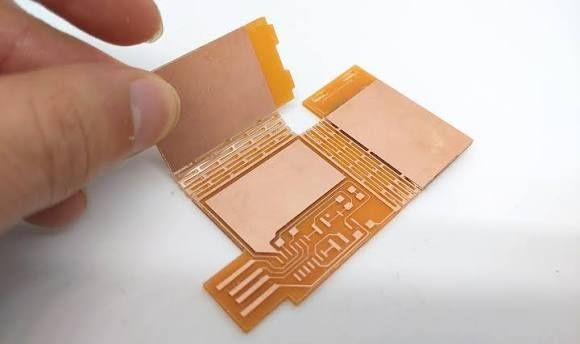
Flexible sensor systems can contain several layers. Conductive electrodes form the sensing structure, while flexible substrates provide mechanical support. Insulating layers can separate electrodes and control electrical behavior.
Depending on the design, manufacturers may use polymer films, elastomeric materials, conductive polymers, metal patterns, nanomaterials, or printed conductive materials. Printed flexible sensors are particularly relevant where thin and lightweight structures are required.
Importance
Flexible sensing technology matters because many modern devices require electronic components that can conform to surfaces rather than remain completely rigid. This is relevant to consumer electronics, healthcare equipment, robotics, manufacturing, transportation, and wearable technology.
Flexible pressure sensors and flexible tactile sensors can detect physical interactions across surfaces. Such capabilities can support interfaces where conventional buttons, rigid switches, or mechanical components may not fit the intended design.
Applications in Touch and Human Interaction
Flexible touch sensors can be integrated into curved displays, interactive surfaces, control interfaces, and other electronic products. Capacitive touch sensor systems can detect a person's interaction without requiring a conventional mechanical switch.
Wearable capacitive sensors can also be incorporated into garments, accessories, or body-worn devices. Their flexibility can allow sensing elements to follow movement, although the practical performance depends on materials, geometry, electronics, and environmental conditions.
Industrial Applications
Industrial capacitive sensors can be used for proximity detection, position sensing, material detection, and equipment monitoring. Flexible industrial sensor systems extend these concepts to surfaces or locations where bending and conformity are relevant.
In manufacturing environments, capacitive sensing systems can help detect changes in objects or materials without necessarily requiring direct mechanical contact. Applications can include machine interfaces, robotic systems, material handling, and equipment monitoring.
Advantages and Technical Challenges
Flexible sensors can provide several design characteristics:
- Mechanical flexibility for curved or moving surfaces.
- Thin construction for compact electronic assemblies.
- Low-profile integration into surfaces and structures.
- Distributed sensing across larger areas.
- Potential integration with printed electronic components.
However, flexible designs also introduce challenges. Repeated bending can affect electrical connections and materials, while humidity, temperature, nearby conductive objects, and electromagnetic interference can influence capacitive measurements.
Calibration is another important consideration. A sensor designed for one application may not produce the same response under different mechanical or environmental conditions.
| Sensor Type | Main Detection Method | Example Applications |
|---|---|---|
| Flexible touch sensor | Capacitance change from touch | Interfaces, displays |
| Flexible pressure sensor | Capacitance change from force | Tactile surfaces, wearables |
| Proximity capacitive sensor | Electrical field variation | Object detection |
| Flexible tactile sensor | Localized physical interaction | Robotics, interactive surfaces |
| Wearable capacitive sensor | Capacitance changes during movement or contact | Wearable electronics |
| Industrial capacitive sensor | Electrical changes related to objects or materials | Equipment monitoring |
Recent Updates
From 2024 through 2026, development in flexible sensing has generally moved toward thinner materials, printed electronics, multifunctional sensing, and greater integration with digital systems. Research and engineering work has increasingly examined materials and structures that can maintain electrical performance while undergoing bending, stretching, or repeated mechanical movement.
Flexible Materials and Printed Electronics
Printed flexible sensors have received continued attention because conductive patterns can be formed on flexible substrates using electronic printing techniques. This can support sensor structures with customized shapes and layouts.
Research in advanced flexible sensor technology also includes conductive nanomaterials, flexible polymers, thin films, and composite materials. Different materials provide different combinations of electrical conductivity, flexibility, durability, and environmental stability.
Integration With Intelligent Systems
Intelligent flexible sensing systems combine sensor hardware with electronic processing and software. Instead of simply detecting a capacitance change, a connected system can interpret measurements and organize them into usable information.
Advanced capacitive sensing technology can also incorporate multiple sensing points. An array of electrodes can provide information about where an interaction occurs, allowing systems to distinguish different locations or patterns.
Industrial and Wearable Development
Advanced industrial capacitive sensor systems are being studied for applications involving robotics, automation, human-machine interaction, and equipment monitoring. Flexible structures can be useful when sensors need to conform to non-flat surfaces.
Wearable applications continue to explore flexible materials for detecting touch, movement, pressure, and interaction. Practical designs must account for motion, sweat, environmental exposure, repeated deformation, and changes in contact conditions.
Tools and Resources
Several technical tools can help people understand, design, and evaluate flexible capacitive sensors. The appropriate resource depends on whether the task involves basic learning, circuit development, material selection, simulation, or measurement.
Design and Simulation Resources
Electronic design software can be used to create electrode layouts and supporting circuits. Electromagnetic simulation tools can help examine electric-field behavior around different electrode arrangements.
Useful resources include:
- Circuit design software for developing measurement electronics.
- Electromagnetic simulation platforms for studying capacitance and field distribution.
- CAD software for creating flexible electrode patterns and mechanical structures.
- Spreadsheet templates for recording capacitance measurements under different conditions.
- Laboratory measurement equipment for evaluating sensor response, repeatability, and environmental effects.
Standards and Educational Resources
Technical publications, academic papers, electronics textbooks, and standards organizations provide information about capacitive sensing principles and measurement practices. Documentation from component manufacturers can also explain circuit configurations and electrical characteristics.
For people learning about complete flexible capacitive sensing systems, educational material covering electrode design, signal conditioning, calibration, materials, and data processing can provide useful background.
FAQs
What is a flexible capacitive sensor?
A flexible capacitive sensor is a bendable electronic component that detects changes in capacitance caused by touch, pressure, proximity, movement, or other physical interactions. Its flexible structure allows integration with curved or moving surfaces.
How do flexible capacitive sensors work?
Flexible capacitive sensors use conductive electrodes to create an electrical sensing structure. When an external object or physical force changes the electrical relationship between the electrodes, the resulting capacitance change can be measured electronically.
What are flexible pressure sensors used for?
Flexible pressure sensors can detect changes associated with physical force or contact. Potential applications include tactile interfaces, robotics, wearable electronics, interactive surfaces, and equipment monitoring.
What are flexible touch sensors used for?
Flexible touch sensors can detect human interaction on curved, thin, or conformable surfaces. They may be incorporated into control interfaces, wearable devices, electronic displays, and interactive surfaces.
What are the challenges of capacitive sensor technology?
Capacitive sensor technology can be affected by environmental conditions, electrical interference, material properties, sensor geometry, and changes in the distance between sensing elements. Flexible designs may also need to account for repeated bending and mechanical deformation.
Conclusion
Flexible capacitive sensors use changes in capacitance to detect physical interactions while providing a structure that can conform to curved or moving surfaces. Their applications include touch interfaces, pressure detection, wearable electronics, robotics, manufacturing, and industrial monitoring. Recent development has focused on flexible materials, printed electronics, sensor arrays, and integration with intelligent digital systems. The practical behavior of each sensing system depends on its materials, electrode structure, electronics, environmental conditions, and intended application.