Industrial Floodlights: An Overview of Applications and Key Features
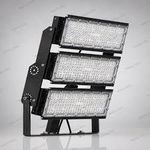
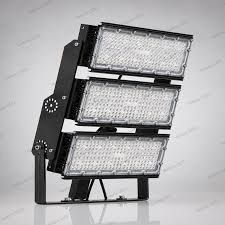
Industrial floodlights are lighting fixtures designed to illuminate large outdoor or indoor areas where broad and consistent visibility is required.
They are commonly used around warehouses, factories, construction areas, loading zones, parking areas, storage yards, transport facilities, and other large properties. Modern industrial floodlights increasingly use LED technology because LEDs can provide directional illumination and can be configured for different operating environments.
Industrial LED floodlights are part of a wider development in industrial lighting, moving from traditional lamps toward solid-state lighting systems. LED technology uses semiconductor components to produce light, allowing fixtures to be designed in various shapes, power levels, beam patterns, and mounting arrangements. This has contributed to the development of LED industrial lighting systems for both indoor and outdoor applications.
The basic purpose of a floodlight is to distribute light across a relatively wide area. Unlike narrow-beam fixtures intended to illuminate a small location, floodlights are generally designed to cover open spaces. The appropriate fixture depends on factors such as mounting height, required illumination, weather exposure, operating hours, and the characteristics of the area being illuminated.
Development of LED Floodlighting
Earlier industrial lighting commonly used technologies such as metal halide, high-pressure sodium, and halogen lamps. These technologies had different characteristics related to light output, warm-up periods, heat generation, and maintenance requirements.
The development of LEDs introduced compact light sources with electronic control. This enabled manufacturers to create high power LED floodlights with different optical designs and control features. LED technology also became common in commercial LED floodlights used around buildings, parking areas, retail properties, and other commercial locations.
Common Types of Industrial Floodlights
Industrial lighting can be divided into several categories according to location and application. Examples include:
- Industrial outdoor lighting for yards, roads, entrances, and open work areas.
- Warehouse LED lighting for storage, loading, and distribution spaces.
- High bay LED floodlights for areas with high ceilings and large floor areas.
- Industrial security lighting for entrances, boundaries, access points, and equipment areas.
- Outdoor industrial LED lighting for exposed environments.
- Industrial area lighting systems designed to illuminate broad sections of a facility.
The design of each category varies according to the physical environment and lighting requirements.
Importance
Industrial lighting affects visibility, movement, equipment observation, and general awareness within large working environments. Adequate illumination can make it easier for people to see pathways, vehicles, machinery, storage areas, and structural features.
For the general public, industrial lighting can also be encountered around roads, warehouses, parking areas, public infrastructure, and commercial properties. The lighting arrangement can influence how clearly people can identify entrances, walkways, vehicles, and other objects after dark.
Supporting Visibility Across Large Areas
Large industrial properties may include open yards, loading zones, storage areas, and access roads. A single small fixture may not illuminate these spaces evenly, so industrial area lighting systems often use multiple fixtures positioned at suitable heights and angles.
LED floodlight systems can be configured with different beam distributions. Wider beams can cover larger areas, while narrower distributions can direct illumination toward specific zones.
Lighting for Indoor Industrial Areas
Indoor facilities can have high ceilings and large floor plans that create particular lighting requirements. High bay LED floodlights and other high-mounted fixtures can distribute illumination from elevated positions.
Warehouse LED lighting may be used for aisles, storage zones, loading areas, and general floor illumination. The layout of shelving, machinery, columns, and other structures can affect the positioning and optical requirements of fixtures.
Environmental and Operational Considerations
Industrial lighting equipment may operate in environments exposed to dust, moisture, vibration, temperature changes, or airborne particles. Fixture selection therefore involves examining enclosure design and environmental ratings in addition to light output.
Other factors can include:
- Mounting height and installation position.
- Beam angle and light distribution.
- Color temperature and color rendering.
- Protection against moisture and dust.
- Operating temperature range.
- Electrical compatibility and control requirements.
- Ease of inspection and maintenance.
Recent Updates
From 2024 through 2026, industrial lighting has continued moving toward connected LED systems, improved optical control, and digital monitoring. The general direction has been toward lighting systems that can respond to operating conditions and provide information about their use.
Energy efficient industrial lighting remains an important area of development. LED fixtures can be paired with lighting controls, occupancy sensors, timers, and daylight sensors to manage when and where illumination is active. Actual energy use depends on fixture specifications, operating schedules, control settings, and environmental conditions.
Smarter Lighting Controls
Automated industrial lighting systems can combine LED fixtures with sensors and control software. For example, a system may adjust lighting according to occupancy or a predefined schedule.
Advanced industrial LED lighting systems may also use network connections to coordinate multiple fixtures. These arrangements can provide centralized monitoring and control, although their complexity depends on the size and design of the installation.
Improvements in Optical Design
Modern high performance industrial floodlights increasingly use refined lenses and reflectors to control how light is distributed. Optical design can help direct illumination toward intended areas while reducing unnecessary spill into nearby spaces.
High output lighting is also being developed for applications requiring substantial illumination from elevated mounting positions. The appropriate output still depends on the dimensions and visual requirements of the specific area.
Greater Integration With Facility Systems
Commercial outdoor lighting systems and industrial lighting networks can increasingly connect with building management and monitoring platforms. This allows lighting information to be considered alongside other facility data.
Complete industrial LED floodlight systems may include fixtures, drivers, sensors, controllers, mounting components, and communication equipment. Integration can vary considerably between systems, so compatibility is an important technical consideration.
| Feature | Typical Purpose | Main Consideration |
|---|---|---|
| LED light source | Produces illumination | Output and efficiency |
| Optical lens | Shapes light distribution | Beam pattern |
| Housing | Protects internal components | Environmental exposure |
| Driver | Regulates electrical input | Electrical compatibility |
| Sensor | Detects conditions | Detection range |
| Controller | Manages lighting behavior | Control method |
| Mounting hardware | Positions the fixture | Height and orientation |
Tools and Resources
Several tools can help with planning and understanding industrial lighting requirements. Lighting calculators can estimate the number of fixtures needed based on room dimensions, mounting height, target illumination, and fixture characteristics.
Lighting Calculation Resources
Photometric planning software can use fixture distribution files to model how light reaches a floor or outdoor area. These tools can help users compare mounting arrangements and identify areas where illumination may be uneven.
Common resources include:
- Lighting layout templates for recording fixture locations.
- Lux calculators for estimating illumination levels.
- Photometric software for modeling light distribution.
- Manufacturer specification sheets for fixture dimensions and electrical characteristics.
- Electrical planning documents for reviewing circuit requirements.
- Lighting standards and technical guidance for understanding application requirements.
Product and System Documentation
Industrial LED lighting equipment documentation typically includes information about power ratings, luminous output, beam angles, color characteristics, environmental protection ratings, dimensions, and operating conditions.
Technical standards organizations and lighting engineering resources can also provide educational information about illumination measurement, glare, electrical safety, and lighting design principles. These resources are useful for understanding terminology and comparing technical specifications.
FAQs
What are industrial floodlights used for?
Industrial floodlights are used to illuminate large indoor or outdoor areas such as factories, warehouses, loading zones, storage yards, parking areas, and access routes. Their broad light distribution makes them suitable for open spaces.
What are industrial LED floodlights?
Industrial LED floodlights are fixtures that use light-emitting diodes as their light source. They are available in different output levels, beam patterns, mounting configurations, and environmental protection designs.
How do industrial security lighting systems work?
Industrial security lighting systems illuminate areas such as entrances, boundaries, parking zones, and access points. They may operate continuously or use timers, motion sensors, or other controls depending on the system design.
What are high bay LED floodlights used for?
High bay LED floodlights are designed for spaces where fixtures are mounted at relatively high positions. They can be used in warehouses, manufacturing areas, storage facilities, and other buildings with substantial ceiling heights.
What are LED floodlight systems?
LED floodlight systems can include multiple LED fixtures along with drivers, sensors, controllers, mounting components, and related electrical equipment. The exact configuration depends on the application and control requirements.
Conclusion
Industrial floodlights provide broad illumination for indoor and outdoor environments where large areas require clear visibility. LED technology has expanded the range of available fixtures, optical designs, controls, and connected lighting configurations. Modern systems can incorporate sensors, digital controls, and monitoring alongside conventional lighting components. Industrial lighting design ultimately depends on factors such as area size, mounting height, environmental conditions, light distribution, and operating requirements.