Garment Manufacturing Equipment: Key Features for Efficient Production
Garment production involves a sequence of operations that transform fabric into finished clothing.
Each stage requires equipment designed for a specific task, from fabric inspection and spreading to cutting, sewing, pressing, finishing, and quality checking. Garment manufacturing equipment helps organize these activities and supports consistent production across different types of apparel.
Modern garment facilities may use conventional machines, automated equipment, computerized controls, or a combination of these technologies. Understanding the main equipment categories and their features helps manufacturers select systems that match fabric characteristics, garment designs, production volumes, and workflow requirements.
Why Garment Manufacturing Equipment Matters
Garment production requires accurate handling of fabric and precise joining of individual components. Equipment selection can influence cutting accuracy, seam quality, production speed, material handling, and finishing results.
Appropriate equipment can support:
- Consistent fabric cutting
- Accurate seam formation
- Controlled fabric handling
- Repeatable production processes
- Reduced material waste
- Improved workplace organization
- Consistent garment finishing
- Easier quality inspection
Different garments require different machine configurations. Lightweight shirts, denim garments, sportswear, jackets, and technical clothing may use different combinations of equipment.
How Garment Manufacturing Equipment Works
Garment manufacturing equipment is normally arranged according to the production sequence. A typical workflow begins with fabric preparation and ends with inspection and packaging.
1. Fabric Inspection
Fabric inspection machines examine rolls for defects, shade variations, holes, stains, or other irregularities. Identifying problems before cutting can help prevent defective sections from entering later production stages.
2. Fabric Spreading
Spreading machines place fabric layers evenly on a cutting table. The fabric must maintain appropriate alignment and tension so that multiple layers can be cut accurately.
3. Pattern Making and Marking
Patterns define the shapes and dimensions of garment components. Computer-aided design systems can create digital patterns and prepare cutting layouts to help optimize fabric utilization.
4. Fabric Cutting
Cutting machines separate fabric layers according to prepared patterns. Depending on production requirements, facilities may use straight-knife cutters, band-knife machines, die cutters, or computerized automatic cutting systems.
5. Sewing and Assembly
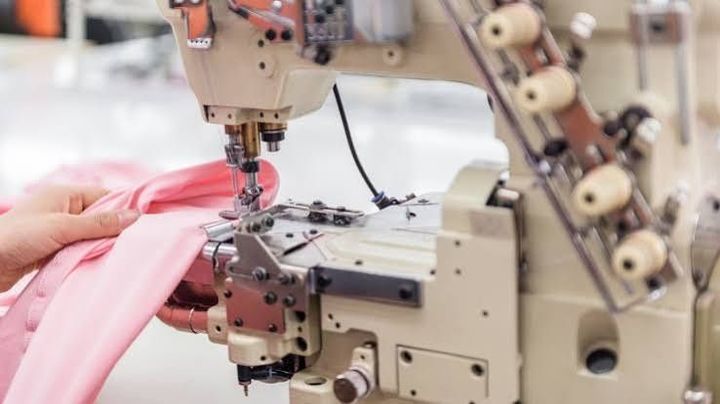
Sewing machines join individual garment components. Different stitch types and machine configurations are used for seams, hems, buttonholes, decorative stitching, and specialized operations.
6. Pressing and Finishing
Pressing equipment shapes garments and helps create the required appearance. Steam presses, ironing systems, fusing machines, and specialized finishing equipment can be used at different stages.
7. Inspection
Finished garments are inspected for dimensions, stitching, appearance, fabric defects, and other quality requirements before they proceed to the final handling stage.
Main Types of Garment Manufacturing Equipment
Fabric Inspection Machines
These machines allow operators to examine fabric rolls under controlled lighting and movement conditions. They can help identify defects before cutting.
Fabric Spreading Machines
Fabric spreading machines distribute layers across cutting tables. Automatic models can control fabric alignment, spreading length, and tension.
Garment Cutting Machines
Cutting equipment includes:
- Straight-knife cutting machines
- Band-knife machines
- Round-knife cutters
- Die-cutting machines
- Computerized automatic cutters
- Laser cutting systems
The appropriate option depends on fabric thickness, pattern complexity, layer height, and production requirements.
Industrial Sewing Machines
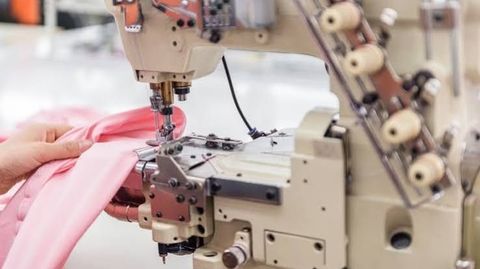
Industrial sewing machines form the core of many garment production lines. Common categories include:
- Lockstitch machines
- Overlock machines
- Coverstitch machines
- Chain-stitch machines
- Buttonhole machines
- Button-attaching machines
- Bartack machines
- Zigzag machines
Each machine type is designed around particular stitching requirements.
Fusing Machines
Fusing machines use controlled heat, pressure, and time to bond interlining materials to fabrics. They are frequently used for collars, cuffs, waistbands, and structured garment components.
Pressing Equipment
Pressing systems can include steam irons, pressing tables, garment presses, form finishers, and steam tunnels. These machines help shape garments and improve their final appearance.
Key Features to Consider
When evaluating garment manufacturing equipment, several technical features deserve attention.
Precision
Cutting and sewing equipment should maintain consistent dimensions and stitch placement. Precision becomes particularly important when working with complex patterns or multiple garment sizes.
Speed Control
Adjustable operating speeds allow machines to accommodate different fabrics and sewing operations. Excessive speed can be unsuitable for delicate materials, while heavier fabrics may require different operating parameters.
Automation
Automated equipment can perform repetitive tasks with reduced manual intervention. Examples include automatic fabric spreading, computerized cutting, programmable sewing, and automated material handling.
Programmability
Computer-controlled machines can store patterns, stitch sequences, or operating parameters. This can support repeatable production when multiple garment designs are processed.
Material Compatibility
Equipment should match the material being processed. Cotton, denim, polyester, wool, leather, knitted fabrics, and technical textiles can have different handling and sewing requirements.
Important Equipment Comparison
| Equipment | Primary Function | Common Application |
|---|---|---|
| Fabric inspection machine | Detect fabric defects | Fabric preparation |
| Spreading machine | Layer fabric evenly | Cutting preparation |
| Automatic cutter | Cut pattern pieces | High-volume production |
| Lockstitch machine | Straight seam formation | General garment assembly |
| Overlock machine | Edge finishing and joining | Knitwear and seam finishing |
| Coverstitch machine | Stretchable hems and seams | Sportswear and knitwear |
| Buttonhole machine | Create buttonholes | Shirts and jackets |
| Fusing machine | Bond interlining | Collars and cuffs |
| Pressing machine | Shape and finish garments | Final finishing |
| Inspection equipment | Check garment quality | Final quality control |
Factors Affecting Equipment Selection
Production Volume
Small production operations may require flexible machines capable of handling varied designs. High-volume facilities may benefit from specialized or automated equipment.
Garment Type
A facility producing shirts may require a different machine mix from one producing denim, outerwear, lingerie, or sportswear.
Fabric Characteristics
Fabric thickness, elasticity, surface structure, and weight influence cutting and sewing requirements.
Floor Space
Large automated systems require adequate space for installation, material movement, operator access, and maintenance.
Maintenance Requirements
Equipment should be accessible for routine cleaning, lubrication, adjustment, inspection, and component replacement.
Automation in Garment Manufacturing
Automated garment manufacturing systems are increasingly used for repetitive and data-driven production tasks. Computerized cutting systems can interpret digital patterns and optimize cutting layouts, while programmable sewing machines can repeat defined stitching sequences.
Other technologies include automated fabric handling, robotic material movement, digital production monitoring, and machine-vision inspection.
Automation can improve process consistency, but its suitability depends on garment complexity, production volume, product variation, and the level of process standardization.
Best Practices for Garment Equipment Management
A structured equipment management approach can help maintain consistent production.
- Match machines to fabric and garment requirements.
- Create preventive maintenance schedules.
- Train operators on machine settings and safe operation.
- Monitor machine performance and recurring faults.
- Keep cutting and sewing equipment properly adjusted.
- Inspect finished garments at defined production stages.
- Document machine settings for repeat production.
- Review workflow layout to reduce unnecessary material movement.
These practices can support reliable equipment operation and help identify process problems before they affect larger production batches.
Who Uses Garment Manufacturing Equipment?
Garment manufacturing equipment is used across many apparel and textile production environments, including:
- Clothing factories
- Sportswear manufacturers
- Denim production facilities
- Workwear production
- Uniform manufacturing
- Knitwear production
- Outerwear manufacturing
- Fashion production units
- Technical garment facilities
The equipment combination varies according to product type, material, production volume, and required finishing processes.
FAQs About Garment Manufacturing Equipment
What equipment is used in garment manufacturing?
Common equipment includes fabric inspection machines, spreading machines, cutting machines, industrial sewing machines, fusing equipment, pressing systems, finishing machines, and inspection equipment.
Which machine is used for cutting garments?
Garment cutting can use straight-knife, round-knife, band-knife, die-cutting, laser, or computerized automatic cutting machines. The appropriate type depends on fabric and production requirements.
What are industrial sewing machines used for?
Industrial sewing machines join and finish garment components. Different models are designed for operations such as straight stitching, edge finishing, stretch seams, buttonholes, and reinforcement.
How does automation affect garment production?
Automation can reduce manual intervention in repetitive tasks such as fabric spreading, cutting, programmable sewing, material handling, and inspection. Its suitability depends on production volume and garment complexity.
What factors should be considered when selecting garment equipment?
Important factors include garment type, fabric characteristics, production volume, machine precision, automation level, available floor space, maintenance requirements, operator skills, and workflow design.
Conclusion
Garment manufacturing equipment forms the foundation of organized apparel production. Fabric inspection, spreading, cutting, sewing, fusing, pressing, finishing, and inspection equipment each contribute to a different stage of the production process.
Modern facilities can combine conventional industrial machines with computerized and automated systems. Selecting equipment according to garment design, fabric characteristics, production volume, available space, and workflow requirements can help create a more consistent and structured manufacturing process.