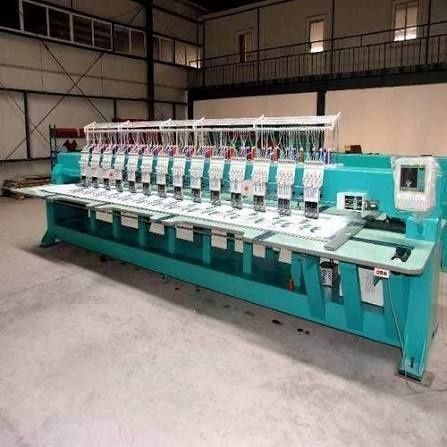
How Embroidery Machine Manufacturing Works: A Complete Guide
Embroidery machine manufacturing involves designing, producing, assembling, programming, calibrating, and testing machines that create decorative or functional stitched patterns on fabric.
Modern embroidery machines combine mechanical movement, precision needle systems, thread management, electronic controls, and computerized pattern processing.
Industrial embroidery machines are available in single-head, multi-head, computerized, and specialized configurations. Their construction depends on factors such as embroidery area, number of needles, stitching speed, thread requirements, fabric type, automation, and pattern complexity.
Why Embroidery Machine Manufacturing Matters
Embroidery requires coordinated movement between the needle, thread, fabric, and embroidery frame. A small timing or positioning error can affect stitch placement, thread tension, or pattern quality.
Manufacturing therefore involves precise production and alignment of many interconnected components. Mechanical parts must work together with motors, sensors, control boards, software, and user interfaces.
The resulting machine must also accommodate different thread types, fabric characteristics, design formats, and production requirements.
How Embroidery Machine Manufacturing Works
The manufacturing process generally involves several stages:
- Machine design: Engineers establish the machine structure, embroidery area, needle configuration, drive system, and control architecture.
- Material selection: Appropriate metals, polymers, electronic components, and other materials are selected for individual parts.
- Component production: Frames, shafts, needle assemblies, thread guides, drive components, and other parts are manufactured.
- Precision machining: Critical mechanical parts are produced according to specified dimensions and tolerances.
- Surface finishing: Selected components may receive polishing, coating, heat treatment, or other finishing processes.
- Component inspection: Parts are checked for dimensional accuracy and functional requirements.
- Mechanical assembly: The machine frame, heads, needle mechanisms, drive systems, and embroidery frames are assembled.
- Electronic integration: Motors, sensors, controllers, displays, and communication components are connected.
- Software integration: Pattern-management and machine-control functions are configured.
- Calibration and testing: Needle movement, thread tension, frame positioning, stitching accuracy, and machine operation are tested.
The exact manufacturing sequence varies according to the machine design and production configuration.
Main Types of Embroidery Machines
Single-Head Embroidery Machines
Single-head machines contain one embroidery head and are generally configured for smaller production volumes, sampling, personalization, or varied design work.
Their relatively compact arrangement can make them suitable where different designs are produced frequently.
Multi-Head Embroidery Machines
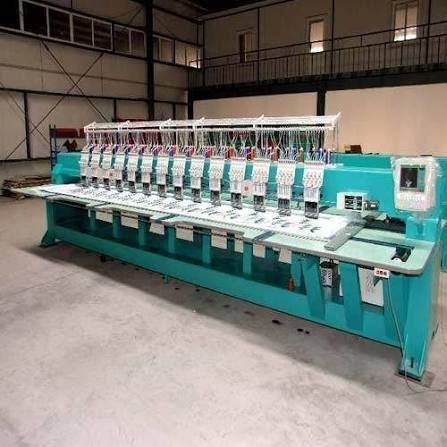
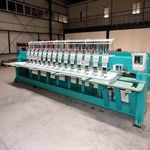
Multi-head systems contain several embroidery heads operating simultaneously.
They can reproduce the same design across multiple garments or fabric pieces during one machine cycle, depending on the machine configuration.
Multi-Needle Embroidery Machines
Multi-needle machines contain several needle positions, allowing different thread colors to be selected automatically during embroidery.
This reduces the need for manual thread changes when designs contain multiple colors.
Computerized Embroidery Machines
Computerized systems use digital controls to manage stitch patterns, needle selection, frame movement, speed, and other machine functions.
Design files can be processed and converted into machine movements through specialized embroidery software.
Key Components in Embroidery Machine Manufacturing
Needle System
The needle moves through the fabric and carries thread to create each stitch.
Needle size and configuration must correspond with the fabric, thread, and embroidery requirements.
Embroidery Head
The embroidery head contains mechanisms responsible for needle movement and thread handling.
Multi-head machines use multiple heads to perform parallel embroidery operations.
Thread Tension System
Thread tension mechanisms regulate how thread moves through the machine.
Consistent tension is important for maintaining stitch formation and reducing issues such as loose stitches or thread breaks.
Thread Guides
Thread guides direct thread along the required path from the supply source toward the needle.
Their position and surface characteristics can influence thread movement.
Embroidery Frame
The frame holds and stabilizes the fabric during stitching.
Frame dimensions determine the available embroidery area, while frame movement controls the position of each stitch relative to the design.
Drive Motors
Motors provide movement for the needle mechanism and embroidery frame.
Modern machines may use electronically controlled motors for precise positioning and speed management.
Control System
The control system coordinates machine movements and provides access to settings such as stitch speed, needle selection, pattern positioning, and other operating parameters.
Important Embroidery Machine Specifications
| Specification | Importance |
|---|---|
| Number of heads | Determines parallel embroidery capacity |
| Number of needles | Determines available thread colors |
| Maximum embroidery area | Defines design size capability |
| Stitching speed | Influences production cycle time |
| Frame size | Determines supported embroidery dimensions |
| Thread compatibility | Defines suitable thread types |
| Needle size range | Supports different materials and threads |
| Pattern memory | Determines stored design capacity |
| Control interface | Supports machine setup and monitoring |
| Motor system | Controls needle and frame movement |
Specifications should be evaluated according to the intended fabric, design complexity, production volume, and level of automation.
Factors Affecting Embroidery Machine Manufacturing
Mechanical Precision
Embroidery machines require accurate movement because the needle and frame must coordinate precisely.
Manufacturing tolerances for shafts, gears, needle assemblies, frames, and other moving components can influence machine operation.
Frame Positioning
The embroidery frame must move accurately according to the programmed design.
Positioning errors can cause distorted patterns or incorrect stitch placement.
Thread Management
Thread tension, routing, needle selection, and thread type all influence stitch formation.
Manufacturing and calibration therefore need to account for reliable thread movement across the machine.
Electronic Controls
Modern embroidery machines rely heavily on electronic control systems.
Sensors, motors, controllers, and software must work together to coordinate thousands of individual machine movements during a design.
Software Compatibility
Computerized embroidery machines process digital design files containing stitch information.
The control system must interpret the design correctly and convert it into coordinated needle and frame movements.
Quality Testing
Finished machines can undergo mechanical, electrical, software, and embroidery testing.
Test patterns can help evaluate stitch consistency, thread handling, frame movement, needle timing, and machine response.
Embroidery Machine Manufacturing vs. Sewing Machine Manufacturing
Although both machines use needles and thread, their functions are different.
| Feature | Embroidery Machines | Sewing Machines |
|---|---|---|
| Primary purpose | Decorative or programmed stitching | Joining or constructing fabric |
| Design control | Often computer-controlled | Varies by machine |
| Frame movement | Important for pattern positioning | Usually more limited |
| Needle positions | Often multiple in industrial models | Commonly one or selected configurations |
| Pattern capability | Complex programmed designs | Primarily seam formation |
| Typical applications | Logos, motifs, decorative designs | Garment and textile assembly |
Some modern textile facilities use both machine categories as part of a broader production workflow.
Applications of Industrial Embroidery Machines
Apparel
Embroidery machines can create decorative designs, logos, lettering, motifs, and other patterns on garments.
Home Textiles
Curtains, cushions, linens, towels, and other textile products can incorporate embroidered patterns.
Promotional and Branded Textiles
Computerized embroidery systems can reproduce programmed designs on garments, caps, bags, and other textile products.
Technical Textiles
Specialized embroidery processes can be used for selected technical applications where stitched structures or precise thread placement are required.
Decorative Textile Production
Complex patterns can be produced using multiple needles, thread colors, and programmed stitch sequences.
Best Practices for Selecting Embroidery Machine Manufacturing Systems
- Define the embroidery application: Determine whether the machine will produce garments, home textiles, technical fabrics, or other products.
- Determine the required embroidery area: Match frame dimensions to the intended design sizes.
- Evaluate needle count: Select a configuration based on the number of thread colors commonly used.
- Consider head count: Multi-head equipment can support parallel production.
- Check stitching speed: Evaluate practical operating speed rather than maximum speed alone.
- Review fabric compatibility: Consider fabric thickness, stretch, density, and construction.
- Assess thread requirements: Check compatibility with the intended thread types and sizes.
- Evaluate software and file compatibility: Ensure digital designs can be processed correctly.
- Review automation features: Consider automatic thread trimming, color changes, thread-break detection, and other functions.
- Examine maintenance requirements: Consider access to needles, tension systems, frames, motors, sensors, and other components.
Who Are Embroidery Machines Suitable For?
Industrial embroidery machines are relevant to garment manufacturers, textile producers, apparel decoration facilities, home-textile operations, uniform producers, and technical textile manufacturers.
The appropriate configuration depends on production volume, design complexity, embroidery area, number of thread colors, fabric characteristics, and desired automation.
Single-head machines can accommodate varied design work, while multi-head configurations can support simultaneous embroidery across multiple fabric pieces.
Frequently Asked Questions
What is embroidery machine manufacturing?
Embroidery machine manufacturing is the process of designing, producing, assembling, programming, calibrating, and testing machines that create programmed stitched patterns on fabric.
How does an embroidery machine work?
The machine coordinates needle movement, thread delivery, and embroidery-frame movement according to a programmed design. The needle creates individual stitches while the frame positions the fabric.
What are the main types of embroidery machines?
Common categories include single-head, multi-head, multi-needle, and computerized embroidery machines. Some machines combine several of these characteristics.
What factors affect embroidery machine performance?
Needle timing, thread tension, frame positioning, machine speed, fabric characteristics, thread type, software settings, component precision, and maintenance can affect embroidery performance.
What is the difference between single-head and multi-head embroidery machines?
A single-head machine has one embroidery head, while a multi-head machine has several heads that can operate simultaneously. The latter can support parallel embroidery operations when the same design is required across multiple pieces.
Conclusion
Embroidery machine manufacturing combines precision mechanical engineering, textile technology, electronics, software, and automated motion control. The manufacturing process includes machine design, component production, assembly, electronic integration, calibration, and testing.
Needles, embroidery heads, thread systems, frames, motors, sensors, and control software must operate together accurately to reproduce programmed designs. Machine selection depends on embroidery area, head count, needle count, fabric characteristics, design complexity, production volume, and automation requirements.
Understanding these factors provides a useful foundation for evaluating embroidery equipment and its role in modern textile production.