How Industrial Muffle Furnaces Work: A Complete Guide
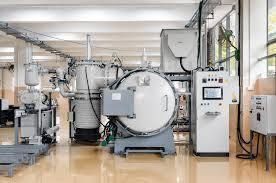
Industrial muffle furnaces are high-temperature heating systems designed to heat materials in an enclosed chamber while separating the load from direct contact with combustion gases.
This arrangement allows controlled thermal processing under defined temperature conditions.
These furnaces are used in applications such as heat treatment, ceramics, material testing, ash determination, laboratory processing, metal treatment, and research. Electric heating is common because it provides precise temperature control and a relatively clean heating environment.
What Are Industrial Muffle Furnaces?
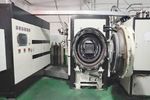
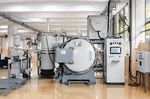
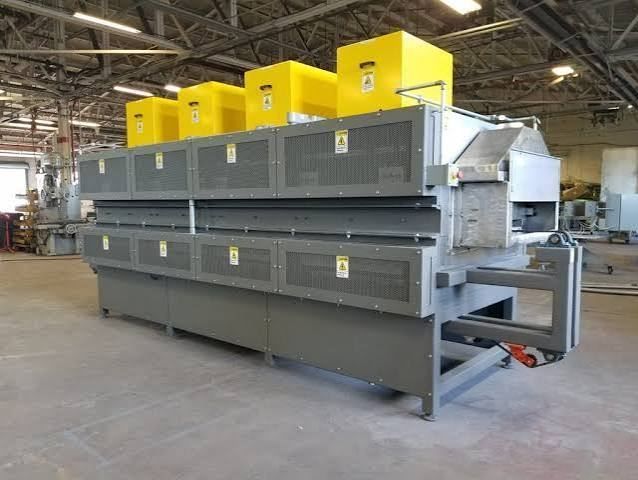
An industrial muffle furnace is a furnace in which the material being processed is placed inside a thermally insulated chamber. The heating system raises the chamber temperature while the enclosure helps isolate the material from direct exposure to the heat source.
A typical furnace includes:
- Heating chamber
- Heating elements
- Thermal insulation
- Temperature sensors
- Controller
- Furnace door
- Outer housing
- Electrical system
- Ventilation or exhaust arrangement
The design varies according to operating temperature, chamber volume, atmosphere requirements, heating rate, and material being processed.
How Industrial Muffle Furnaces Work
1. Material Loading
The material is placed inside the furnace chamber using an appropriate tray, crucible, container, or support.
The load arrangement should allow sufficient space for uniform heat distribution.
2. Temperature Setting
The required temperature is entered into the furnace control system. Modern controllers can use programmed temperature profiles that include heating, holding, and cooling stages.
3. Heating
Electrical energy is supplied to heating elements positioned around the chamber. The elements convert electrical energy into heat.
Heat is transferred through radiation and convection within the chamber, gradually raising the temperature of the material.
4. Temperature Measurement
A thermocouple or another temperature sensor measures the chamber temperature. The controller compares the measured temperature with the programmed setpoint.
5. Temperature Regulation
The control system adjusts electrical power to the heating elements to maintain the required temperature. Depending on the furnace design, the system may use on-off control, proportional-integral-derivative control, or other control methods.
6. Holding Period
Once the desired temperature is reached, the furnace may maintain that temperature for a specified period. The holding stage allows the material to undergo the required thermal process.
7. Cooling
After processing, the furnace can be allowed to cool naturally or follow a programmed cooling profile. The material is removed after reaching a suitable temperature.
Types of Industrial Muffle Furnaces
Electric Muffle Furnaces
Electric muffle furnaces use resistance heating elements to generate heat. They are widely used because electrical heating allows relatively precise temperature regulation.
High-Temperature Muffle Furnaces
High-temperature models use specialized heating elements and refractory materials designed for elevated operating temperatures.
They are used for applications involving ceramics, advanced materials, thermal testing, and selected heat-treatment processes.
Box-Type Muffle Furnaces
Box-type furnaces have a rectangular chamber and front-loading door. They are suitable for batch processing of samples, components, and other materials.
Laboratory Muffle Furnaces
Laboratory models generally have smaller chamber capacities and are designed for controlled testing, research, sample preparation, and analytical procedures.
Programmable Muffle Furnaces
Programmable systems allow users to define multiple temperature stages, heating rates, holding periods, and cooling conditions.
These systems are useful when thermal cycles must be repeated consistently.
Main Components of Muffle Furnaces
| Component | Main Function |
|---|---|
| Heating chamber | Contains the material during processing |
| Heating elements | Generate heat |
| Thermal insulation | Reduces heat loss |
| Thermocouple | Measures temperature |
| Temperature controller | Regulates chamber temperature |
| Furnace door | Provides access to the chamber |
| Refractory lining | Protects the chamber from high temperatures |
| Outer casing | Protects internal components |
| Power supply | Provides electrical energy |
| Control panel | Allows operating parameters to be set |
| Exhaust or vent | Manages gases or vapors where required |
Heating Elements Used in Muffle Furnaces
Heating elements are selected according to the required temperature and atmosphere.
Resistance Wire Elements
Resistance wire elements are used in many moderate-temperature furnaces. They generate heat as electrical current passes through the resistive material.
Silicon Carbide Elements
Silicon carbide heating elements can operate at higher temperatures and are used in furnaces designed for demanding thermal applications.
Molybdenum Disilicide Elements
Molybdenum disilicide elements are used in certain high-temperature furnace designs. They can support elevated-temperature operation under suitable atmospheric conditions.
The heating element selection affects maximum temperature, heating rate, service life, and furnace operating characteristics.
Temperature Control
Temperature control is one of the most important functions of a muffle furnace. A sensor measures the chamber temperature while a controller regulates power supplied to the heating elements.
Programmable systems can create thermal profiles containing several stages.
For example:
| Stage | Typical Function |
|---|---|
| Ramp-up | Gradually increases temperature |
| Soak | Maintains a selected temperature |
| Additional ramp | Changes temperature to another setpoint |
| Hold | Maintains the second temperature |
| Cooling | Reduces chamber temperature |
The actual temperature profile depends on the material and process requirements.
Factors Affecting Furnace Performance
Chamber Size
A larger chamber can accommodate more material but may require greater heating capacity and longer heating times.
Maximum Temperature
The required operating temperature determines the selection of heating elements, insulation, refractory materials, sensors, and control equipment.
Heating Rate
The heating rate describes how quickly the furnace reaches a target temperature. It depends on heating capacity, load characteristics, insulation, and chamber design.
Load Characteristics
Material composition, mass, shape, moisture content, and thermal properties affect how quickly the load heats.
Insulation
Effective insulation reduces heat loss and helps maintain a stable chamber temperature.
Atmosphere
Some materials require controlled atmospheric conditions to limit oxidation or unwanted reactions. Furnace design may therefore incorporate gas supply or controlled-atmosphere features.
Applications of Industrial Muffle Furnaces
Heat Treatment
Muffle furnaces can be used for selected heat-treatment processes involving metals, ceramics, and other materials.
Ceramics Processing
Ceramic materials can undergo controlled heating, firing, sintering, or other thermal processes.
Material Testing
Laboratories and industrial facilities use muffle furnaces for thermal testing and evaluation of material behavior at elevated temperatures.
Ash and Residue Determination
Muffle furnaces can heat samples to remove combustible components and leave inorganic residues for analysis.
Metal Processing
Certain metal components and samples can undergo controlled thermal treatment in muffle furnaces.
Research and Development
Researchers use controlled high-temperature furnaces to study material changes, thermal reactions, phase transformations, and other phenomena.
Advantages and Limitations
| Aspect | Industrial Muffle Furnace |
|---|---|
| Heating method | Commonly electrical resistance heating |
| Temperature control | Electronic and programmable options |
| Processing mode | Usually batch-based |
| Atmosphere | Air or controlled atmosphere depending on design |
| Temperature uniformity | Depends on chamber and heating configuration |
| Maintenance | Requires inspection of elements, insulation, sensors, and controls |
| Applications | Heat treatment, ceramics, testing, research, and thermal processing |
Muffle furnaces provide a controlled heating environment, but the actual temperature uniformity and thermal performance depend on furnace design, load arrangement, insulation, heating elements, and control strategy.
Maintenance Requirements
Regular maintenance helps preserve furnace performance and operating safety.
Heating elements should be inspected for deterioration, deformation, or electrical problems. Thermocouples should be checked for damage and replaced when their condition affects temperature measurement.
The chamber lining and insulation should be inspected for cracks, deterioration, or contamination. Door seals and hinges should also be examined.
Temperature controllers and electrical connections should be checked according to the equipment manufacturer's maintenance procedures.
Safety Considerations
Muffle furnaces operate at high temperatures and can contain hot surfaces and heated materials. Appropriate precautions are necessary during loading, unloading, inspection, and maintenance.
Important measures can include:
- Thermal protection for operators
- Suitable heat-resistant tools
- Electrical protection
- Proper furnace ventilation
- Controlled access around hot surfaces
- Temperature monitoring
- Emergency shutdown controls
- Appropriate handling of heated materials
Materials that release hazardous fumes should only be processed in equipment configured for the specific application with appropriate ventilation and exhaust controls.
FAQs
What is an industrial muffle furnace used for?
Industrial muffle furnaces are used for controlled high-temperature processing, including heat treatment, ceramics processing, material testing, ash determination, research, and selected thermal treatments.
How does a muffle furnace generate heat?
Most industrial muffle furnaces use electrical resistance heating elements. Electrical current passes through the elements, producing heat that is transferred into the insulated chamber.
What is the purpose of the muffle chamber?
The chamber separates the material from direct contact with the heating source or combustion gases, providing a controlled environment for thermal processing.
How is temperature controlled in a muffle furnace?
A thermocouple or other temperature sensor measures the chamber temperature, while an electronic controller regulates power supplied to the heating elements.
What maintenance does a muffle furnace require?
Typical maintenance includes inspecting heating elements, thermocouples, insulation, refractory materials, door components, electrical connections, and temperature-control equipment.
Conclusion
Industrial muffle furnaces provide controlled high-temperature environments for a wide range of thermal processing applications. Heating elements, insulated chambers, temperature sensors, controllers, refractory materials, and electrical systems work together to produce and regulate heat.
The appropriate furnace depends on temperature requirements, chamber size, heating rate, material characteristics, atmosphere, and process conditions. Regular inspection of heating elements, sensors, insulation, and controls can help maintain consistent operation and safe furnace use.