How Sachet Filling Machines Work: A Complete Guide
Sachet filling machines are packaging machines designed to measure, fill, seal, and cut small quantities of products into individual flexible pouches called sachets.
They are used for liquids, powders, granules, pastes, and other products that can be accurately portioned.
These machines combine film handling, product dosing, pouch forming, sealing, cutting, and control systems into a coordinated packaging process. Depending on the product and packaging format, sachet machines can use different filling mechanisms and sealing configurations.
Sachet packaging is common in food, beverages, pharmaceuticals, personal-care products, household products, agricultural materials, and other industries where small-volume packaging is required.
Why Sachet Filling Machines Matter
Small-format packaging requires consistent product quantities, reliable seals, and controlled film movement. Manual filling can make these requirements difficult to maintain at higher production volumes.
Automated sachet filling machines coordinate several operations in sequence. The packaging film is formed into sachets, the product is measured and introduced, the package is sealed, and individual sachets are separated.
Machine configuration depends on factors such as product properties, sachet dimensions, filling volume, packaging material, production rate, and sealing requirements.
How Sachet Filling Machines Work
Although designs differ, a typical sachet filling process follows these stages:
- Film unwinding: Packaging film is supplied from a roll.
- Film registration: Sensors and controls position the film accurately.
- Sachet forming: The film is folded or shaped according to the package design.
- Sealing preparation: Heat-sealing or another compatible sealing method prepares the package boundaries.
- Product dosing: A controlled quantity of product is measured.
- Filling: The product enters the formed sachet.
- Final sealing: The package is sealed to contain the product.
- Cutting: Sealed sachets are separated from the continuous film.
- Discharge: Finished sachets move toward collection or downstream packaging equipment.
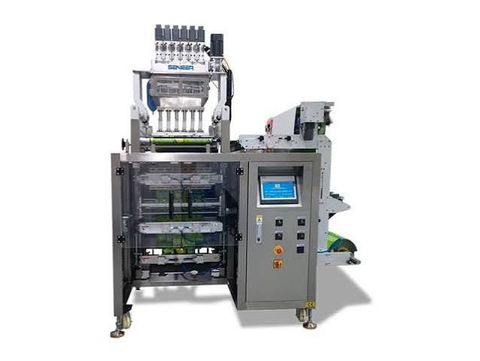
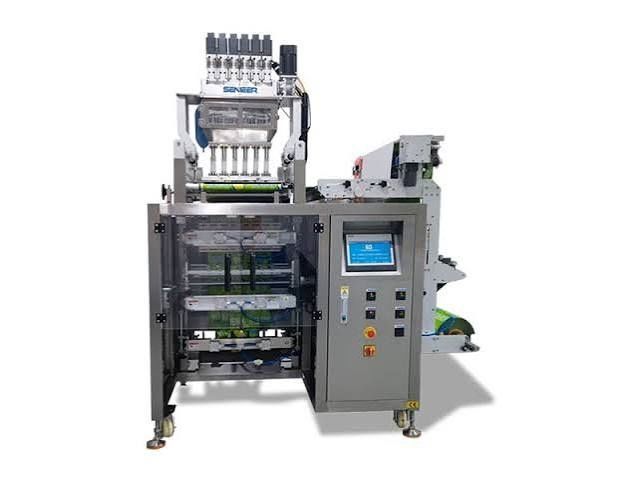
Multi-lane machines can perform several sachet cycles across the width of the packaging film.
Main Types of Sachet Filling Machines
Liquid Sachet Filling Machines
Liquid filling machines are designed for products such as sauces, beverages, oils, liquid detergents, and other flowable materials.
Depending on product viscosity and required filling volume, systems may use piston, pump, volumetric, or other dosing mechanisms.
Powder Sachet Filling Machines
Powder filling machines handle products such as spices, powdered beverages, pharmaceutical powders, and other dry materials.
Auger fillers and other controlled dosing systems can be used depending on powder flow characteristics.
Granule Sachet Filling Machines
Granular products may include sugar, salt, seeds, detergents, and other particulate materials.
Volumetric cups, weigh-based systems, or other dosing mechanisms can be selected according to product characteristics and fill requirements.
Paste Sachet Filling Machines
Viscous products require filling systems designed to manage resistance to flow.
Products such as creams, gels, pastes, and selected sauces may require piston or pump-based filling arrangements.
Key Components of Sachet Filling Machines
Film Roll Holder
The film roll holder supports the packaging-material roll and feeds film into the machine.
Controlled unwinding helps maintain consistent film movement.
Film Forming System
Forming components shape the flat film into the required sachet configuration.
Forming collars, guides, rollers, or other mechanisms can be used depending on the machine design.
Filling System
The filling mechanism determines how much product enters each sachet.
The appropriate system depends on whether the product is liquid, powder, granule, or paste.
Sealing Unit
The sealing unit closes the sachet and helps prevent product leakage or contamination.
Heat sealing is widely used for compatible flexible packaging materials, although sealing parameters depend on the film structure.
Cutting System
Cutting mechanisms separate individual sachets or groups of sachets from the continuous film.
Cutting can be synchronized with film movement and sealing cycles.
Sensors
Sensors monitor film position, product flow, package registration, machine status, and other operating conditions.
They can help detect problems and maintain coordinated machine operation.
Control System
A programmable control system manages machine timing, filling parameters, sealing temperatures, film movement, and other settings.
Modern interfaces allow operators to adjust and monitor machine functions.
Important Sachet Filling Machine Specifications
| Specification | Importance |
|---|---|
| Filling range | Defines the quantity that can be packaged |
| Number of lanes | Influences simultaneous sachet production |
| Film width | Determines compatible packaging material dimensions |
| Sachet dimensions | Defines package format |
| Filling accuracy | Influences consistency of product quantity |
| Machine speed | Determines production cycles |
| Sealing method | Determines how the package is closed |
| Product type | Determines appropriate filling mechanism |
| Film compatibility | Influences packaging-material selection |
| Control system | Manages machine operation and settings |
Specifications should be evaluated according to the product and packaging material rather than machine speed alone.
Factors Affecting Sachet Filling Performance
Product Characteristics
Viscosity, particle size, bulk density, flowability, moisture, temperature, and stickiness can affect filling behavior.
A powder that flows easily may require a different dosing arrangement from a cohesive or moisture-sensitive powder.
Filling Accuracy
The filling mechanism must deliver a consistent quantity within the required range.
Accuracy can be affected by product density, flow behavior, machine settings, dosing technology, and environmental conditions.
Packaging Film
Film thickness, flexibility, sealing characteristics, barrier properties, and material composition can influence machine operation.
The film must be compatible with forming, sealing, and cutting requirements.
Sealing Temperature
For heat-sealed packaging, temperature, pressure, and dwell time influence seal formation.
Incorrect settings can produce weak seals or excessive heat exposure.
Machine Speed
Increasing machine speed can affect filling time, sealing time, film movement, and product behavior.
The practical operating rate therefore depends on the complete packaging process.
Sachet Filling Machines vs. Bottle Filling Machines
Both machine types automate product dosing, but their packaging formats are different.
| Feature | Sachet Filling Machines | Bottle Filling Machines |
|---|---|---|
| Package format | Flexible sachet | Rigid bottle or container |
| Typical package size | Small portions | Small to large containers |
| Packaging material | Flexible film | Glass, plastic, or other rigid materials |
| Filling process | Form, fill, seal, cut | Container positioning, filling, closing |
| Product range | Liquids, powders, granules, pastes | Liquids, powders, and other products |
| Space requirements | Often compact for multi-lane formats | Depends on line configuration |
The appropriate system depends on product characteristics, package format, required quantity, and downstream packaging requirements.
Applications of Sachet Filling Machines
Food and Beverage
Sachet packaging is used for sauces, spices, sugar, salt, powdered beverages, condiments, and other portion-controlled products.
Pharmaceutical Products
Selected pharmaceutical powders, liquids, gels, and other products can be packaged in sachets when the formulation and packaging requirements permit.
Personal Care
Creams, lotions, shampoos, gels, and other personal-care products can be packaged in small flexible sachets.
Household Products
Detergents, cleaning powders, and other household formulations can be packaged using suitable sachet filling systems.
Agricultural Products
Certain powders, granules, and other agricultural formulations can be portioned into sachets when compatible with the product and packaging material.
Best Practices for Selecting Sachet Filling Machines
- Identify the product type: Determine whether the product is liquid, powder, granule, or paste.
- Define the filling range: Establish the required minimum and maximum fill quantities.
- Evaluate product flow behavior: Consider viscosity, density, particle size, and flowability.
- Select the dosing method: Match the filler to the product characteristics.
- Determine sachet dimensions: Define width, length, and package configuration.
- Review film compatibility: Check film thickness, structure, sealing properties, and barrier requirements.
- Consider lane configuration: Multi-lane systems can support simultaneous sachet production.
- Evaluate sealing controls: Check temperature, pressure, and dwell-time controls where applicable.
- Review automation: Consider sensors, recipe management, alarms, and machine monitoring.
- Plan cleaning and maintenance: Ensure product-contact components can be accessed and maintained appropriately.
Who Are Sachet Filling Machines Suitable For?
Sachet filling machines are suitable for food processors, beverage manufacturers, pharmaceutical producers, personal-care manufacturers, household-product facilities, and other packaging operations that require small flexible packages.
The appropriate machine depends on product characteristics, filling volume, package dimensions, film type, production requirements, and sealing method.
A machine designed for free-flowing powder may not be suitable for a viscous liquid, so product testing and machine configuration are important parts of the selection process.
Frequently Asked Questions
What are sachet filling machines?
Sachet filling machines are automated packaging machines that measure products, form flexible film into sachets, fill the packages, seal them, and cut them into individual units.
How does a sachet filling machine work?
The machine unwinds packaging film, forms the film, doses the product, seals the sachet, and cuts the finished package. Sensors and controls coordinate these operations.
What products can sachet filling machines handle?
Depending on the machine design, sachet fillers can handle liquids, powders, granules, pastes, and other flowable products.
What affects sachet filling accuracy?
Product density, viscosity, flowability, particle size, dosing method, machine settings, filling speed, and environmental conditions can affect filling accuracy.
How should a sachet filling machine be selected?
Selection should consider product type, filling range, product flow characteristics, sachet dimensions, film material, sealing method, number of lanes, production requirements, and automation features.
Conclusion
Sachet filling machines integrate film handling, product dosing, forming, sealing, cutting, sensing, and machine control into a coordinated packaging process. Their configuration varies significantly according to whether the product is a liquid, powder, granule, or paste.
Important selection factors include filling range, dosing technology, film compatibility, sachet dimensions, sealing conditions, machine speed, lane count, and automation. Understanding these factors helps packaging operations evaluate equipment according to their product and package requirements.