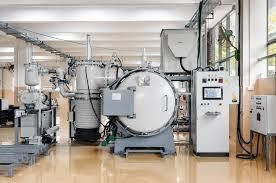
How Vacuum Furnace Manufacturing Works: A Complete Guide
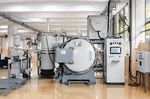
Vacuum furnace manufacturing involves designing, fabricating, assembling, and testing furnaces that perform heat treatment and thermal processing under controlled low-pressure conditions.
These furnaces are engineered to heat materials while limiting contact with atmospheric gases that can cause oxidation, contamination, or unwanted surface reactions.
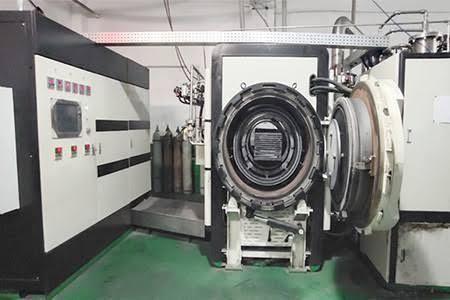
A vacuum furnace combines a sealed chamber, vacuum pumping equipment, heating elements, insulation, temperature sensors, cooling systems, electrical controls, and supporting mechanical components. Manufacturing each subsystem requires careful consideration of temperature, pressure, material compatibility, thermal performance, and operating requirements.
What Is Vacuum Furnace Manufacturing?
Vacuum furnace manufacturing is the process of producing industrial heating equipment capable of operating under vacuum or controlled gas atmospheres. The manufacturing process typically includes engineering design, material selection, component fabrication, chamber construction, heating-system installation, control integration, vacuum-system assembly, testing, and final inspection.
Vacuum furnaces can be configured for applications such as:
- Annealing
- Brazing
- Hardening
- Tempering
- Stress relieving
- Sintering
- Solution treatment
- Degassing
- High-temperature material processing
The furnace configuration varies according to the material being processed and the required thermal cycle.
Main Stages of Vacuum Furnace Manufacturing
1. Furnace Design
Manufacturing begins with defining the required chamber dimensions, operating temperature, vacuum level, heating capacity, cooling method, load characteristics, and thermal cycle.
Engineers also determine the arrangement of heating elements, insulation, vacuum connections, sensors, electrical systems, and cooling circuits.
2. Material Selection
Materials are selected based on their ability to withstand high temperatures, repeated thermal cycling, vacuum conditions, and mechanical loads.
Common construction materials can include stainless steel and other alloys for the vacuum chamber, while specialized refractory and insulating materials are used inside the hot zone.
3. Vacuum Chamber Fabrication
The vacuum chamber forms the sealed enclosure in which heat treatment occurs.
Manufacturing may involve cutting, forming, machining, welding, and finishing metal sections. Particular attention is given to joints, doors, ports, flanges, and other areas that influence vacuum integrity.
4. Heating System Assembly
Heating elements are installed within the hot zone. Their arrangement is designed to distribute heat around the workload and achieve the required temperature range.
Depending on furnace design, heating elements may be made from graphite, molybdenum, tungsten, silicon carbide, or other high-temperature materials.
5. Thermal Insulation Installation
Insulation surrounds the hot zone to reduce heat transfer toward the outer furnace structure.
The insulation design depends on the maximum temperature, heating method, atmosphere, and required thermal performance.
6. Vacuum System Integration
Vacuum pumps, valves, piping, gauges, and pressure-control components are connected to the chamber.
The pumping system must provide sufficient capacity for the chamber volume, required vacuum level, outgassing characteristics, and process gas load.
7. Cooling System Assembly
Many vacuum furnaces use water-cooled jackets, doors, seals, electrical connections, or chamber walls. Some systems also incorporate gas cooling for faster material cooling after heating.
Cooling circuits are designed around the furnace structure and required thermal cycle.
8. Control System Integration
Sensors, controllers, programmable logic controllers, power-control devices, and human-machine interfaces are connected to coordinate furnace operation.
The control system can regulate heating, pressure, cooling, gas flow, and other process variables.
Main Components of a Vacuum Furnace
| Component | Main Function |
|---|---|
| Vacuum chamber | Provides a sealed processing environment |
| Hot zone | Contains the heating and insulation system |
| Heating elements | Generate thermal energy |
| Thermal insulation | Limits heat loss |
| Vacuum pumps | Remove gases from the chamber |
| Vacuum valves | Control gas and vacuum flow |
| Pressure gauges | Measure chamber pressure |
| Thermocouples | Measure temperature |
| Cooling system | Removes heat from selected components or the load |
| Gas inlet system | Introduces controlled process gases |
| Control cabinet | Houses electrical control components |
| PLC or controller | Coordinates automated operation |
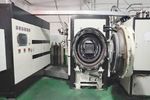
| Furnace door | Provides access to the processing chamber |
How the Vacuum System Works
After the furnace is loaded and sealed, the vacuum pumps begin removing air and other gases from the chamber.
Pressure sensors monitor the vacuum level. Different pumps may be used at different stages because no single pump technology is suitable for every pressure range.
A typical system may use a roughing pump followed by a higher-vacuum pump when lower pressures are required. Valves isolate sections of the system and regulate gas movement.
The achievable vacuum depends on chamber volume, leakage, surface cleanliness, outgassing, pump capacity, and system design.
Heating and Temperature Control
Vacuum furnaces use electrical heating elements to raise the temperature of the hot zone. Power controllers regulate the electrical energy supplied to the elements.
Thermocouples or radiation-based temperature sensors measure process temperature. The control system compares measured values with programmed setpoints and adjusts heating power accordingly.
A typical heat-treatment cycle may include:
- Evacuation
- Controlled heating
- Temperature stabilization
- Soaking
- Controlled cooling
- Gas backfill or atmospheric restoration
The actual sequence depends on the material and treatment process.
Gas Cooling Systems
Some vacuum furnaces use inert gases such as nitrogen or argon for controlled cooling. After the heating or soaking stage, gas can be introduced into the chamber at a controlled pressure.
Gas circulation through heat exchangers or cooling passages can accelerate cooling while maintaining a controlled atmosphere.
The cooling configuration depends on the required cooling rate and the characteristics of the material being processed.
Manufacturing Quality Checks
Vacuum furnace manufacturing requires inspection of individual components and the assembled system.
Vacuum Leak Testing
The chamber and connected vacuum circuit are tested for leaks. Helium leak detection may be used where high sensitivity is required.
Temperature Uniformity Testing
Temperature measurements at multiple locations can determine whether the hot zone provides the required thermal uniformity.
Pressure Testing
Vacuum gauges and pumping systems are checked to confirm that the furnace can reach and maintain the specified pressure conditions.
Electrical Testing
Heating elements, power connections, sensors, controllers, and safety circuits are inspected before commissioning.
Cooling System Testing
Water circuits and gas-cooling systems can be tested for flow, pressure, leakage, and temperature performance.
Factors Affecting Vacuum Furnace Manufacturing
Maximum Operating Temperature
Higher temperatures require suitable heating elements, insulation, chamber materials, sensors, and electrical components.
Vacuum Level
The required pressure range influences chamber construction, seals, pumps, valves, gauges, and leak-testing requirements.
Chamber Size
Larger chambers require different structural designs and greater heating and pumping capacities.
Load Characteristics
Load mass, geometry, material composition, and thermal properties affect furnace heating and cooling requirements.
Cooling Rate
Some processes require controlled slow cooling, while others require accelerated cooling. The furnace must be configured accordingly.
Process Atmosphere
Some heat treatments require high vacuum, while others require controlled inert gas atmospheres at selected stages.
Applications of Vacuum Furnaces
Aerospace Components
Vacuum heat treatment can be used for selected aerospace alloys and precision components where controlled thermal processing is required.
Tool and Die Manufacturing
Vacuum furnaces can process tool steels, dies, molds, and other components requiring controlled heat treatment.
Medical Components
Certain metallic medical components can undergo vacuum-based heat treatment to control material properties and surface conditions.
Automotive Components
Gears, shafts, engine components, and other precision parts can undergo vacuum heat treatment processes.
Powder Metallurgy
Vacuum furnaces can be used for sintering and thermal processing of selected powder-based materials.
Brazing
Vacuum brazing joins compatible materials without exposing the workpiece to conventional atmospheric conditions during the joining cycle.
Maintenance Considerations
Vacuum furnaces require regular inspection of pumps, seals, heating elements, insulation, sensors, electrical connections, and cooling systems.
Vacuum chamber surfaces should be kept clean because accumulated deposits can increase outgassing and affect vacuum performance.
Heating elements can gradually deteriorate through repeated thermal cycles. Thermocouples and other sensors should also be inspected and replaced according to their condition and applicable maintenance procedures.
Vacuum pumps may require filter changes, oil maintenance where applicable, seal inspection, or other procedures based on pump technology.
Safety Considerations
Vacuum furnaces combine high temperatures, electrical power, pressurized cooling circuits, vacuum conditions, and potentially reactive or inert process gases.
Important safeguards can include:
- Temperature interlocks
- Pressure monitoring
- Cooling-water protection
- Electrical isolation
- Emergency shutdown systems
- Gas monitoring where required
- Door and chamber interlocks
- Appropriate thermal protection
- Preventive inspection of seals and pressure-related components
Maintenance should be performed using appropriate isolation and lockout procedures.
FAQs
What is vacuum furnace manufacturing?
Vacuum furnace manufacturing is the process of designing, fabricating, assembling, integrating, and testing furnaces that perform controlled thermal processing under vacuum or controlled gas conditions.
What are the main components of a vacuum furnace?
Major components include the vacuum chamber, hot zone, heating elements, insulation, vacuum pumps, valves, pressure gauges, temperature sensors, cooling systems, gas circuits, and control equipment.
Why are vacuum furnaces used for heat treatment?
Vacuum environments reduce exposure to atmospheric gases during heating. This can help control oxidation and other unwanted surface reactions during appropriate heat-treatment processes.
How is vacuum integrity tested?
Vacuum integrity can be evaluated through pressure-rise testing and, when higher sensitivity is required, helium leak testing.
What materials are used to manufacture vacuum furnaces?
Stainless steels and other suitable alloys are commonly used for structural and chamber components, while specialized refractory, graphite, molybdenum, tungsten, silicon carbide, and insulating materials may be used in the hot zone depending on the temperature and process.
Conclusion
Vacuum furnace manufacturing combines mechanical fabrication, thermal engineering, vacuum technology, electrical controls, cooling systems, and process instrumentation. The finished furnace must maintain a sealed processing environment while delivering controlled heating, temperature uniformity, vacuum conditions, and cooling performance.
The manufacturing process includes chamber fabrication, hot-zone assembly, insulation installation, vacuum-system integration, cooling-system construction, control integration, and comprehensive testing. Proper material selection, leak testing, thermal verification, calibration, and safety controls are important for producing a furnace suited to its intended heat-treatment application.