Industrial Crushers: An Overview of Types, Uses, and Crushing Processes
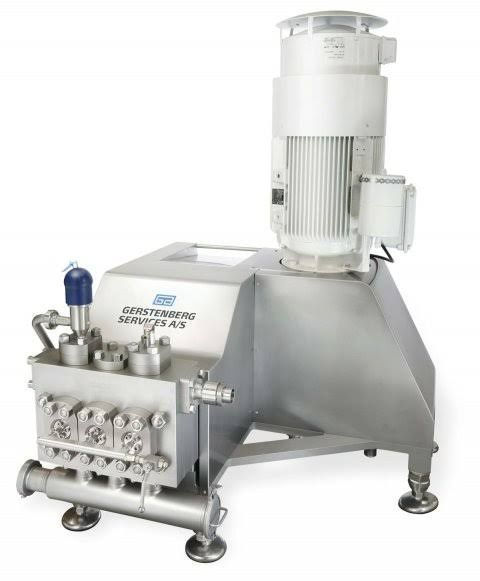
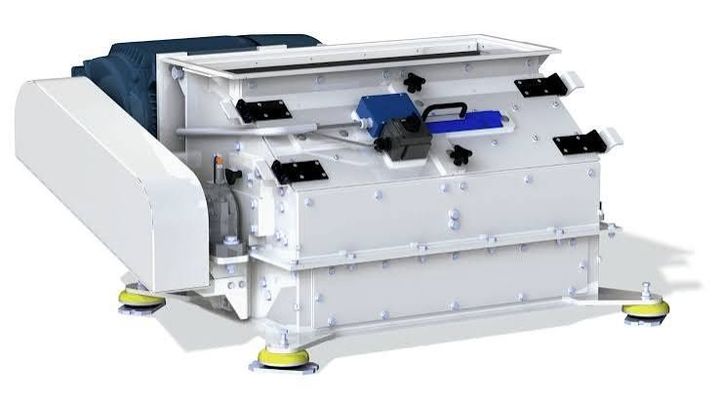
Industrial crushers are machines designed to reduce large pieces of rock, stone, minerals, concrete, and other materials into smaller and more manageable sizes.
Industrial crushers are used in mining, construction, quarrying, recycling, and material processing, where controlled size reduction is an important part of preparing materials for later stages.
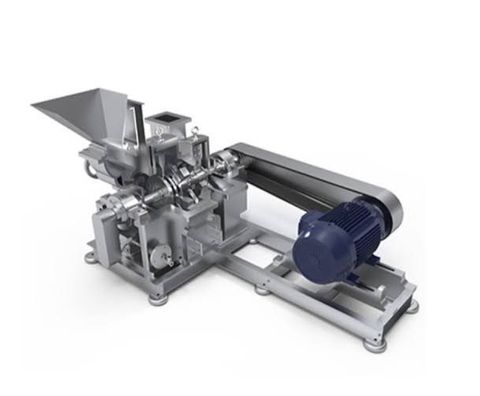
An industrial crusher machine works by applying mechanical force to a material. Depending on the design, the material may be compressed, struck, or subjected to a combination of forces until it reaches the required size. Industrial crushing equipment can range from compact machines for specific applications to large systems designed to process substantial quantities of material.
The basic concept of crushing has existed for centuries, with early methods relying on manual tools and simple mechanical devices. The development of powered machinery introduced greater control over crushing operations. Modern industrial crushing machinery can now incorporate sensors, automated controls, conveyors, screens, and monitoring systems.
How Industrial Crushers Work
The basic crushing process normally begins with material being fed into a crushing chamber. A mechanical component applies force to break the material, after which smaller pieces leave the chamber through an opening or discharge system.
The final particle size depends on factors such as the material type, feed size, crusher design, operating settings, and number of processing stages. Some applications use several crushers in sequence to gradually reduce material size.
Main Crusher Types
Different industrial crusher machines use different crushing principles. Common types include:
- Industrial jaw crushers, which use compressive force between a fixed surface and a moving jaw.
- Industrial cone crushers, which compress material between a rotating or oscillating mantle and a surrounding surface.
- Industrial impact crushers, which use impact forces to break material against internal surfaces or other components.
- Industrial rock crushers, which are commonly configured for reducing naturally occurring rock.
- Industrial stone crushers, which process stone into smaller sizes for construction and other material applications.
The choice of machine depends on the physical properties of the material and the required output.
Importance
Industrial crushers play an important role in industries that need to process large quantities of solid material. Without size reduction, many materials would be difficult to transport, screen, blend, recycle, or use in subsequent processing stages.
In construction, crushed stone and aggregate are used in roads, foundations, concrete, and other infrastructure applications. In mining, crushing can be part of the preparation process before materials undergo screening, grinding, separation, or other stages.
Supporting Material Processing
Aggregate crushing equipment helps transform larger pieces of stone into controlled particle sizes. The resulting material can then be separated using screens according to different size ranges.
Heavy duty industrial crushers are used in applications where the incoming material can be large, dense, or abrasive. Their design may include reinforced components and systems intended to manage demanding operating conditions.
Crushing Stages
A crushing operation can involve more than one stage. Primary crushing reduces large feed material into a smaller size, while secondary and tertiary stages can further reduce the material.
| Crushing Stage | General Purpose | Common Equipment |
|---|---|---|
| Primary | Initial size reduction | Jaw crushers, gyratory crushers |
| Secondary | Further size reduction | Cone crushers, impact crushers |
| Tertiary | Additional reduction and shaping | Cone crushers, impact crushers |
| Screening | Separating material by size | Vibrating screens |
| Conveying | Moving processed material | Belt conveyors |
Using multiple stages can provide greater control over the final particle size. The exact arrangement depends on the material and processing requirements.
Factors Affecting Crushing
Several factors influence crusher performance and output. Material hardness, moisture, abrasiveness, feed size, desired product size, and machine settings can all affect the crushing process.
High capacity industrial crushers may be configured for large material flows, while precision crushing equipment is designed around more controlled size reduction. In either case, proper operating parameters are important for maintaining predictable processing conditions.
Recent Updates
From 2024 through 2026, developments in crushing technology have generally focused on automation, digital monitoring, energy management, equipment integration, and improved control of material flows. These developments are being incorporated into both new equipment and upgraded crushing plants.
Automation and Digital Monitoring
Automated crushing systems can use sensors and control systems to monitor equipment conditions and process variables. Data may include operating load, temperature, vibration, material flow, and other measurements.
Automated material crushing systems can use this information to coordinate crushers, conveyors, feeders, and screens. This can reduce the need for operators to manually adjust every individual part of a connected process, although human supervision remains important.
More Connected Crushing Systems
Advanced industrial crushing systems increasingly connect multiple machines through centralized control platforms. This can allow operators to observe several stages of a crushing process from a common interface.
Industrial crushing machinery may also incorporate condition-monitoring technologies. These systems can identify changes in equipment behavior that may indicate the need for inspection or adjustment.
Focus on Energy and Material Efficiency
Energy consumption remains an important consideration in crushing because breaking large, hard materials requires significant mechanical force. Equipment development has therefore included attention to drive systems, process control, material flow, and machine configuration.
High efficiency industrial crushers are generally discussed in relation to how effectively a machine converts mechanical input into useful material reduction. Actual performance varies according to feed characteristics, operating conditions, machine configuration, and processing requirements.
Tools and Resources
Several tools can help people understand, plan, and monitor crushing operations. Technical manuals and equipment documentation explain machine components, operating principles, safety requirements, and maintenance procedures.
Crushing Calculators and Planning Tools
Engineering calculators can be used to estimate aspects of material processing, such as feed and product size relationships, material flow, power requirements, or conveyor capacity. These calculations usually require application-specific information and should be interpreted within the limits of the relevant equipment and process.
Process flow diagrams are also useful for showing how crushers, screens, feeders, and conveyors are arranged. A simple diagram can make a complex crushing circuit easier to understand.
Monitoring and Control Resources
Industrial monitoring platforms can collect information from connected equipment. Depending on the system, operators may view operating loads, temperatures, vibration measurements, production flow, and alarm conditions.
Technical standards, equipment manuals, mining and construction publications, and engineering reference materials can provide additional information about industrial crusher machines and crushing processes.
Common Components in a Crushing Circuit
A complete industrial crushing equipment setup may include several supporting components:
- Feeders to regulate the amount of material entering a crusher.
- Crushers to reduce material size.
- Screens to separate material according to particle size.
- Conveyors to move material between processing stages.
- Dust-control equipment to manage airborne particles.
- Control systems to monitor and coordinate equipment.
The configuration varies according to material characteristics, required output, available space, and process design.
FAQs
What are industrial crushers used for?
Industrial crushers are used to reduce large materials such as rock, stone, minerals, concrete, and recycled materials into smaller sizes. They are commonly used in mining, quarrying, construction, aggregate processing, and recycling.
What are the main types of industrial crusher machines?
Common types include industrial jaw crushers, industrial cone crushers, and industrial impact crushers. Each type applies mechanical force differently and may be suited to particular material characteristics and crushing stages.
How do industrial rock crushers work?
Industrial rock crushers apply mechanical force to break rock into smaller pieces. Depending on the crusher type, the force may involve compression, impact, or a combination of mechanical actions.
What are automated crushing systems?
Automated crushing systems use sensors, control equipment, and software to monitor and coordinate parts of a crushing process. They can connect crushers with feeders, screens, and conveyors while providing information about operating conditions.
What is the difference between primary and secondary crushing?
Primary crushing performs the initial reduction of large feed material. Secondary crushing processes the material further to achieve a smaller and more controlled particle size before later processing or screening.
Conclusion
Industrial crushers are mechanical systems used to reduce large materials into smaller sizes for mining, construction, quarrying, recycling, and related applications. Jaw, cone, and impact crushers use different mechanisms and can be arranged across multiple crushing stages. Modern systems increasingly incorporate automation, sensors, digital monitoring, and connected control technologies. The appropriate crushing arrangement depends on material characteristics, required particle size, processing capacity, and the overall design of the crushing circuit.