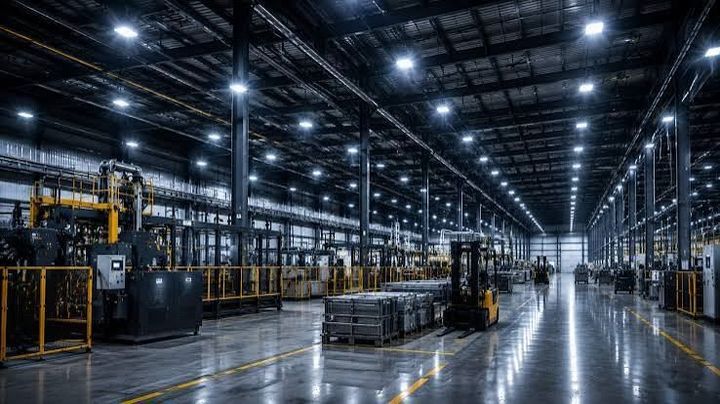
Industrial Lighting Systems: An Overview of Modern Illumination Technologies
Industrial lighting systems are designed to provide suitable illumination across factories, warehouses, workshops, processing facilities, outdoor areas, and other industrial environments.
Unlike ordinary household lighting, industrial lighting must account for larger spaces, higher ceilings, demanding operating conditions, equipment movement, and different visual requirements. Modern systems commonly use LED technology, electronic controls, sensors, and connected monitoring features.
The development of industrial lighting equipment has followed broader changes in electrical and lighting technology. Earlier facilities commonly relied on fluorescent, metal halide, mercury vapor, or high-pressure sodium lamps. LED technology introduced solid-state lighting, which uses semiconductor components to produce illumination and can be integrated with digital controls.
Today, commercial industrial lighting can include industrial LED lighting systems, industrial lighting fixtures, warehouse lighting systems, and outdoor installations. The appropriate configuration depends on factors such as ceiling height, room dimensions, environmental conditions, required illumination levels, operating schedules, and the activities performed in a particular area.
Main Components of Industrial Lighting
A complete industrial lighting system may contain several components that work together. Industrial lighting fixtures hold and distribute the light source, while mounting structures position fixtures at suitable locations. Electrical wiring, drivers, switches, sensors, and control equipment form additional parts of the overall installation.
Common components include:
- LED luminaires designed for industrial environments.
- High bay fixtures for spaces with elevated ceilings.
- Low bay fixtures for areas with lower mounting heights.
- Floodlights for outdoor locations and large open areas.
- Emergency lighting equipment for designated safety applications.
- Sensors and controllers for automated lighting functions.
High bay industrial lighting is commonly associated with warehouses, manufacturing areas, distribution facilities, and buildings with high ceilings. Industrial high bay LED lights can provide illumination over broad floor areas when installed according to appropriate design requirements.
Types of Industrial Lighting
Different environments require different lighting arrangements. Factory lighting systems may use high bay, low bay, task, or linear fixtures depending on the building layout and activities taking place there.
Hazardous location lighting systems are designed for environments where flammable gases, vapors, dust, or other classified hazards may be present. Such systems require equipment designed for the relevant hazardous-area classification and applicable electrical requirements.
Industrial outdoor lighting systems are used around loading areas, yards, pathways, parking areas, building entrances, and other exterior locations. Their design can account for weather exposure, mounting height, glare, visibility, and operating schedules.
Importance
Lighting has a direct relationship with visibility in industrial environments. Workers may need to read labels, inspect materials, operate machinery, identify controls, move through aisles, or observe equipment conditions. Inadequate or poorly distributed illumination can make these activities more difficult.
Industrial lighting systems also affect how spaces are organized and monitored. Warehouses, factories, workshops, and outdoor areas may have different illumination requirements because their layouts and activities are not identical.
Supporting Visibility and Workplace Activities
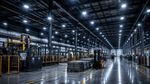
Warehouse lighting systems must account for storage racks, aisle widths, ceiling heights, and the movement of people or vehicles. Uniform illumination can help reduce areas with significant differences in brightness, while task lighting can provide additional illumination where detailed visual work occurs.
Factory lighting systems may require a combination of general and task illumination. Assembly, inspection, machining, packaging, and maintenance areas can have different visual requirements.
Energy and Operating Considerations
Energy efficient industrial lighting has become an important area of building management. LED technology can use electrical energy differently from many older lighting technologies, while electronic controls can adjust operating periods according to occupancy, schedules, or available daylight.
Industrial lighting control systems can include timers, occupancy sensors, daylight sensors, dimming controls, and centralized management interfaces. These technologies allow lighting operation to be coordinated with how an area is being used.
However, lighting efficiency depends on the complete system rather than the lamp alone. Fixture selection, installation height, optical distribution, controls, maintenance conditions, and operating schedules all influence actual performance.
Environmental and Safety Requirements
Industrial facilities can expose lighting equipment to dust, moisture, vibration, heat, cold, chemicals, or mechanical impacts. Industrial LED lighting equipment therefore comes in different enclosure and protection configurations.
Lighting installed in hazardous environments requires additional consideration. Equipment must correspond to the relevant classification and regulatory requirements rather than being selected solely on brightness or energy characteristics.
| Industrial Area | Common Lighting Type | Main Design Considerations |
|---|---|---|
| Warehouse | High bay fixtures | Ceiling height, aisles, rack layout |
| Factory floor | High bay or linear fixtures | Work areas, machinery, visual tasks |
| Workshop | Low bay or task lighting | Work surfaces and equipment |
| Outdoor yard | Flood or area lighting | Weather, coverage, glare |
| Hazardous area | Classified lighting | Hazard type and applicable requirements |
| Office within facility | Commercial fixtures | Visual comfort and workspace layout |
Recent Updates
From 2024 through 2026, industrial lighting has continued moving toward LED-based systems, digital controls, connected sensors, and data-based management. The general direction is toward lighting systems that can be adjusted according to occupancy, schedules, daylight, and facility conditions.
Advanced industrial LED lighting systems increasingly combine luminaires with electronic control components. Instead of operating every fixture in the same manner throughout the day, connected systems can divide lighting into zones and apply different settings to different areas.
Smart Lighting and Automation
Smart industrial lighting systems can connect lighting equipment with sensors, controllers, communication networks, and management software. Depending on the system, information about occupancy, operating schedules, or equipment status can be used to adjust lighting behavior.
Automated industrial lighting systems can also support scheduled operation. For example, specific zones may be programmed to operate during particular working periods while other areas respond to occupancy detection.
These systems can introduce additional configuration requirements. Network connectivity, device compatibility, cybersecurity, sensor placement, and control logic all influence how a connected lighting installation operates.
LED Technology Development
Industrial LED lighting systems continue to develop through improvements in optical design, thermal management, electronic drivers, and fixture construction. Different beam patterns allow manufacturers and lighting designers to direct illumination toward particular areas.
High performance industrial lighting equipment may also be designed for demanding environmental conditions. The relevant specifications can include ingress protection, operating temperature ranges, impact resistance, electrical characteristics, and photometric performance.
Controls and Building Integration
Industrial lighting control systems are increasingly considered alongside other building systems. Lighting controls may communicate with building management platforms or other automation equipment where compatible communication protocols are available.
Integration can provide centralized monitoring and control, but compatibility must be evaluated for each installation. Older electrical infrastructure may require additional equipment or configuration when connected with newer digital lighting technologies.
Tools and Resources
Several tools can help explain, plan, or evaluate industrial lighting arrangements. Lighting calculation software can estimate illumination levels based on fixture characteristics, mounting heights, room dimensions, and surface properties.
Lighting Planning Resources
Photometric data from fixture manufacturers can provide information about light distribution and intensity. Lighting design software can use these files to model how illumination may be distributed across a floor plan.
Useful resources include:
- Lighting layout templates for documenting fixture positions.
- Photometric calculators for estimating illumination.
- Energy calculators for comparing lighting operating patterns.
- Lux meters for measuring illumination at specific locations.
- Lighting control diagrams for documenting sensors and switching arrangements.
- Electrical design documentation for recording circuits and equipment.
Standards and Technical Information
Lighting projects can also reference publications from organizations involved in electrical safety, lighting engineering, workplace illumination, and building standards. Requirements vary by country, facility type, and application.
Technical documentation for industrial lighting equipment can explain electrical ratings, mounting requirements, environmental protection, operating conditions, and compatible controls. These documents are useful when comparing technical characteristics or planning an installation.
FAQs
What are industrial lighting systems?
Industrial lighting systems are lighting arrangements designed for factories, warehouses, workshops, processing facilities, yards, and other industrial environments. They can include LED fixtures, high bay luminaires, controls, sensors, wiring, and supporting electrical equipment.
What are industrial LED lighting systems used for?
Industrial LED lighting systems are used to illuminate manufacturing floors, warehouses, workshops, storage areas, and other facilities. Their configuration depends on ceiling height, room layout, visual tasks, environmental conditions, and control requirements.
How do warehouse lighting systems work?
Warehouse lighting systems distribute illumination across storage areas, aisles, work zones, and circulation spaces. High bay fixtures are commonly used where ceilings are elevated, while controls may adjust lighting according to occupancy or operating schedules.
What are hazardous location lighting systems?
Hazardous location lighting systems are designed for areas where specific flammable gases, vapors, dust, or other classified hazards may exist. The lighting equipment must correspond to the applicable hazardous-area classification and electrical requirements.
What are smart industrial lighting systems?
Smart industrial lighting systems combine lighting fixtures with sensors, controllers, communication networks, and software. They can support functions such as scheduling, occupancy-based control, zoning, monitoring, and automated adjustment.
Conclusion
Industrial lighting systems have developed from conventional electrical lamps into integrated arrangements involving LED technology, sensors, controls, and digital management. Industrial LED lighting systems are now used across factories, warehouses, workshops, outdoor areas, and specialized environments with different illumination requirements. Modern systems increasingly incorporate automation and connected controls while continuing to address environmental, electrical, and safety considerations. The appropriate lighting configuration depends on the physical space, activities, operating conditions, applicable requirements, and control needs.