Mechanical Cable Guide: Construction, Applications, and Performance
Mechanical cables are flexible components used to transfer motion, force, or control input from one location to another.
They are found in machinery, vehicles, industrial equipment, agricultural machines, and various mechanical systems where a direct mechanical connection is difficult or impractical. Mechanical cables can transmit pulling force through an inner cable that moves inside an outer protective housing.
The basic design of mechanical cables has existed for many years. Early cable mechanisms were relatively simple, while modern designs can include carefully engineered materials, protective coverings, low-friction surfaces, and specialized fittings. Today, industrial mechanical cables are used where controlled movement, routing flexibility, and reliable mechanical communication are required.
Basic Construction of Mechanical Cables
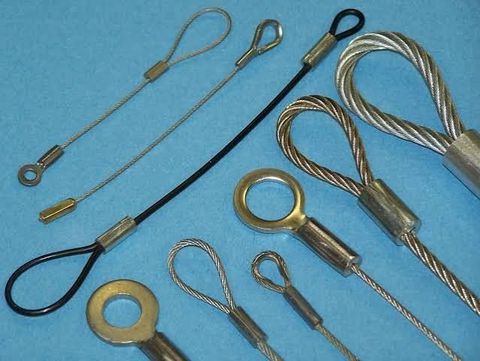
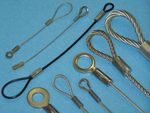
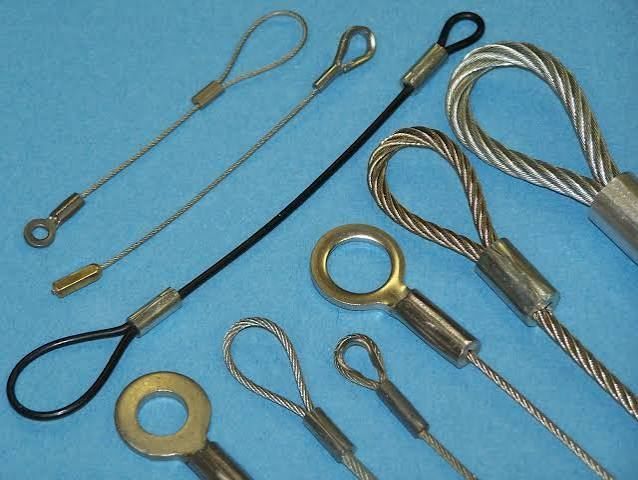
A typical mechanical cable contains several main components. The inner cable, often made from multiple strands of metal wire, carries the pulling force. Around it, an outer housing protects the inner element and provides a guided path.
Mechanical cable assemblies can also include end fittings, mounting brackets, seals, adjustment mechanisms, and connection points. The exact construction depends on the application, required movement, operating environment, and force involved.
Flexible mechanical cables are designed to follow curved routes while maintaining controlled movement. The amount of flexibility depends on factors such as cable diameter, strand construction, housing design, bending radius, and materials.
How Mechanical Cable Systems Work
A mechanical cable system generally works through relative movement between the inner cable and its housing. When an operator or mechanical device pulls or moves one end, the inner cable transfers that movement to the opposite end.
Mechanical control cables are commonly used for functions such as throttle movement, braking mechanisms, shifting systems, valve operation, and mechanical adjustment. The cable does not normally create movement by itself; instead, it transfers movement generated by an external input.
| Component | Main Function | Common Consideration |
|---|---|---|
| Inner cable | Transfers pulling force | Strength and flexibility |
| Outer housing | Guides and protects the cable | Bending and protection |
| End fitting | Connects cable to equipment | Compatibility |
| Mounting point | Holds housing in position | Stability |
| Seal or cover | Helps protect internal parts | Environmental exposure |
| Adjustment mechanism | Controls cable position | Setup accuracy |
Importance
Mechanical cables remain important because many machines need a way to transfer movement around obstacles, through confined spaces, or between components positioned at different angles. A rigid linkage may not be practical in these situations because it requires a fixed path.
Industrial mechanical cable systems are used in manufacturing equipment, agricultural machinery, construction equipment, transportation systems, and other mechanical applications. Their role can range from basic manual controls to more complex industrial control cable systems.
Supporting Mechanical Movement
A mechanical cable can allow an input at one location to control a component several points away. This arrangement can simplify mechanical layouts and provide flexibility when equipment has moving parts or limited installation space.
Mechanical actuator cables are one example. They can connect a control mechanism to an actuator, allowing movement to be transferred through a routed cable. The required cable characteristics depend on the force, travel distance, operating temperature, and movement pattern.
Applications in Heavy Equipment
Heavy equipment mechanical cables can be used in construction machinery, agricultural equipment, lifting equipment, and material-handling systems. These environments may expose cables to vibration, dirt, moisture, temperature changes, and repeated movement.
Heavy duty mechanical cables therefore require suitable construction for their intended operating conditions. Protection around the cable path can also help reduce exposure to contaminants and physical contact with surrounding components.
Precision and Control
Some equipment requires controlled movement with relatively small amounts of unwanted motion. Precision mechanical cable systems are designed around factors such as cable travel, routing, friction, adjustment, and connection geometry.
High performance mechanical cables may incorporate specialized construction methods to meet particular movement or environmental requirements. Their actual performance depends on the complete cable assembly and the conditions in which it is installed.
Factors That Affect Performance
Several factors influence how a mechanical cable operates:
Bending radius affects how easily the cable can follow a curved route.
Friction influences the amount of input force required for movement.
Cable length affects routing and movement characteristics.
Temperature can influence materials and lubrication.
Vibration can contribute to wear at connection points.
Contamination can affect movement when protective components are inadequate.
Alignment can influence smoothness and mechanical efficiency.
Proper routing is particularly important because sharp bends or unnecessary changes in direction can increase resistance and wear.
Recent Updates
From 2024 through 2026, mechanical cable development has generally focused on durability, compact construction, improved environmental protection, and integration with increasingly automated equipment. Mechanical cables continue to be used alongside electronic controls rather than being replaced by a single technology across all applications.
Integration With Industrial Systems
Industrial mechanical control systems are increasingly designed alongside electronic sensors, programmable controllers, and monitoring equipment. In some machines, mechanical cables perform the physical movement while electronic systems provide measurement or coordination.
Industrial mechanical cable integration therefore involves considering both mechanical and digital components. Engineers may examine how cable movement interacts with sensors, actuators, control units, and machine safety functions.
Advances in Cable Assemblies
Custom industrial cable assemblies are increasingly designed around specific routing, connection, and environmental requirements. A custom configuration can account for cable length, end fittings, mounting arrangements, movement range, and equipment geometry.
Custom mechanical cable assembly systems may also use protective coverings or specialized fittings for particular environments. The objective is to match the cable construction with the mechanical requirements rather than treating every application as identical.
Material and Design Considerations
Modern mechanical cable engineering systems may use combinations of metals, polymers, protective coatings, and engineered housings. Material selection can influence flexibility, resistance to environmental conditions, friction, and mechanical strength.
Advanced mechanical control cable systems may also be designed with greater attention to installation space and repeated movement. Compact equipment can require cables that fit through restricted routes while maintaining predictable movement.
Tools and Resources
Several resources can help explain, select, design, or evaluate mechanical cable systems. Engineering drawings are useful for documenting cable length, routing, mounting locations, and connection points.
Measurement and Design Resources
Cable design often begins with measurements of the equipment and the required movement. Useful resources include:
Cable length calculators for estimating required cable dimensions.
Bend-radius references for checking routing limitations.
Mechanical drawing templates for documenting cable paths.
Force and travel worksheets for comparing input and output movement.
Maintenance checklists for recording inspection points.
These resources help organize technical information before a cable assembly is incorporated into equipment.
Engineering and Reference Resources
Technical catalogs, engineering manuals, equipment documentation, and standards databases can provide information about materials, dimensions, mechanical ratings, and environmental considerations. Computer-aided design platforms can also be used to model cable routes and identify potential interference with nearby components.
For industrial applications, documentation for industrial control cable systems can help engineers understand connection arrangements and installation requirements. Equipment manuals are particularly useful because cable geometry and connection details can vary considerably between machines.
FAQs
What are mechanical cables used for?
Mechanical cables transfer pulling force or movement between two locations. They are commonly used for controls, actuators, braking mechanisms, shifting systems, valves, machinery controls, and equipment adjustments.
How do mechanical control cables work?
Mechanical control cables normally contain an inner cable that moves inside an outer housing. Movement at one end is transferred through the inner cable to a mechanism at the other end.
What are industrial mechanical cables?
Industrial mechanical cables are cable systems designed for use in industrial machinery and equipment. Their construction can account for factors such as vibration, repeated movement, environmental exposure, routing requirements, and mechanical loads.
What are custom mechanical cable assemblies?
Custom mechanical cable assemblies are cable configurations designed around particular equipment requirements. They can incorporate specified lengths, end fittings, housings, mounting arrangements, and routing characteristics.
How are heavy duty mechanical cables different?
Heavy duty mechanical cables are designed for applications involving demanding mechanical conditions or repeated loading. Their construction can include stronger internal components and protective features suited to the intended environment.
Conclusion
Mechanical cables provide a practical method for transferring movement and force through flexible routes in many types of equipment. Their construction typically combines an inner cable, protective housing, connection fittings, and mounting components. Modern applications increasingly consider mechanical cables alongside electronic controls, sensors, and automated equipment. Performance depends on factors such as routing, bending, friction, materials, environmental exposure, and the requirements of the complete mechanical system.