Sludge Drying Systems for Efficient Wastewater Treatment
Sludge drying systems reduce the moisture content of sludge generated during wastewater treatment.
By removing water through controlled evaporation, these systems can produce a drier and more concentrated material that is easier to handle, transport, store, or process further.
Sludge drying is generally performed after processes such as thickening and dewatering. Depending on the application, systems can use solar energy, heated air, direct contact with hot gases, indirect heat transfer, or combinations of these approaches.
Why Sludge Drying Systems Matter
Wastewater sludge can contain a large proportion of water even after mechanical dewatering. Further moisture reduction can decrease the volume and mass of the material and prepare it for subsequent treatment or utilization.
Drying can also change the physical characteristics of sludge. Wet sludge may be difficult to transport and handle, while dried material can be more suitable for controlled storage or downstream thermal and biological processes.
Key purposes of sludge drying include:
- Moisture reduction: Evaporation removes additional water after mechanical dewatering.
- Volume reduction: Lower moisture content can reduce the overall sludge volume.
- Improved handling: Drier solids can be easier to convey and store.
- Preparation for further processing: Dried sludge can be used as feedstock for selected thermal or recovery processes.
- Controlled treatment: Temperature, airflow, residence time, and moisture can be monitored during operation.
How Sludge Drying Systems Work
Although designs vary, most sludge drying systems use controlled heat transfer to evaporate water from sludge.
A typical process involves several stages:
1. Sludge Preparation
Sludge is commonly thickened or mechanically dewatered before thermal drying. Removing some free water first can reduce the thermal energy required for subsequent evaporation.
2. Sludge Feeding
The partially dewatered sludge is introduced into the drying system through pumps, conveyors, screws, or other feeding mechanisms.
3. Heat Transfer
Heat is supplied to the sludge either directly through heated air or gas or indirectly through heated surfaces.
4. Moisture Evaporation
Water within the sludge absorbs heat and changes into vapor. Mixing or movement can expose additional sludge surfaces to the drying medium.
5. Vapor Management
Moist exhaust air or vapor is collected and treated as required. Depending on the system, condensers, scrubbers, filters, or other air-treatment equipment may be incorporated.
6. Dried Sludge Discharge
Once the target moisture level is reached, the dried material leaves the system for storage, further processing, or another designated use.
Main Types of Sludge Drying Systems
Direct Thermal Drying
In direct drying systems, heated air or gas comes into direct contact with the sludge. Heat is transferred directly to the material, causing water to evaporate.
These systems can provide relatively rapid drying but require appropriate management of exhaust gases, odors, and airborne particles.
Indirect Thermal Drying
Indirect systems transfer heat through heated surfaces without direct contact between the heating medium and sludge.
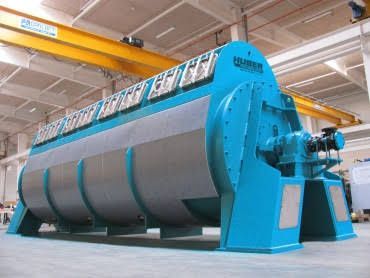
A rotating drum, paddle, disc, or other heated surface can transfer thermal energy to the material. The separated vapor can then be collected and treated.
Solar Sludge Drying
Solar drying uses solar radiation and natural or assisted airflow to evaporate water. Greenhouse-style structures can increase temperature and provide controlled ventilation.
Solar systems can have lower direct thermal energy requirements, although drying performance depends heavily on climate, available solar radiation, humidity, and seasonal conditions.
Belt Drying Systems
Belt dryers transport sludge on a moving perforated belt while heated air passes through or around the material. The gradual movement allows moisture to evaporate during the drying cycle.
Fluidized-Bed Drying
Fluidized-bed systems use heated air to suspend and move small particles. The resulting contact between the drying air and solids can provide efficient heat and mass transfer.
Comparison of Sludge Drying Methods
| Drying Method | Heat Transfer | Typical Operation | Important Consideration |
|---|---|---|---|
| Direct thermal | Heated air or gas contacts sludge | Continuous or batch | Exhaust treatment |
| Indirect thermal | Heated surface | Continuous or batch | Heat-transfer surface |
| Solar drying | Solar radiation and airflow | Batch or semi-continuous | Weather dependence |
| Belt drying | Heated air over moving belt | Continuous | Belt airflow and loading |
| Fluidized bed | Heated air through particles | Continuous | Particle size and air control |
Actual performance depends on sludge properties, initial moisture content, target moisture level, temperature, airflow, residence time, and system design.
Main Components of Sludge Drying Systems
Feed System
The feed system moves dewatered sludge into the dryer at a controlled rate. Screw conveyors, pumps, hoppers, and belt conveyors can be used depending on sludge characteristics.
Heating System
The heating arrangement provides the thermal energy required for evaporation. Possible heat sources include hot water, steam, thermal oil, heated air, or recovered process heat.
Drying Chamber
The chamber provides the controlled environment where heat and moisture transfer occur.
Mixing or Conveying Mechanism
Rotating paddles, screws, belts, or other mechanisms distribute sludge and expose additional surfaces to the drying medium.
Exhaust and Vapor Treatment
Moist air, vapor, odors, and fine particles may require collection and treatment before release.
Control System
Sensors and controllers can monitor temperature, airflow, humidity, feed rate, moisture content, and equipment status.
Factors Affecting Drying Performance
Several variables influence the amount of energy required and the final moisture content.
| Factor | Effect on Drying |
|---|---|
| Initial moisture | Higher moisture generally requires more evaporation |
| Sludge composition | Organic and mineral content affects drying behavior |
| Particle size | Smaller particles generally provide more surface area |
| Drying temperature | Influences evaporation rate |
| Airflow | Affects heat and moisture transfer |
| Residence time | Determines exposure to drying conditions |
| Sludge thickness | Influences heat penetration and evaporation |
| Ambient humidity | Particularly important for solar drying |
| Heat-source temperature | Influences available thermal energy |
Pretreatment can have a major effect on overall drying requirements. Mechanical dewatering before thermal drying can remove a substantial amount of water without using evaporation energy.
Heat Recovery and Energy Management
Thermal drying can require significant energy because water must absorb heat before evaporating. For this reason, energy management is an important part of system design.
Some installations recover heat from exhaust air, condensate, industrial processes, or other available sources. Heat exchangers can transfer energy between hot exhaust streams and incoming air or other process fluids.
The suitability of heat recovery depends on temperature levels, contamination risks, system configuration, and the characteristics of the available heat source.
Automation and Monitoring
Modern sludge drying systems can incorporate automated controls to maintain stable operating conditions.
Common monitoring parameters include:
- Sludge feed rate
- Dryer temperature
- Exhaust temperature
- Airflow
- Humidity
- Pressure
- Moisture content
- Motor load
- Heat-source conditions
- Equipment status
Automated controls can adjust feed rates, heating levels, airflow, and conveying speed according to measured conditions.
Moisture monitoring can also help determine when the sludge has reached the desired discharge condition.
Applications of Sludge Drying Systems
Municipal Wastewater Treatment
Municipal wastewater plants can use sludge drying after dewatering to further reduce moisture and prepare solids for subsequent management.
Industrial Wastewater
Industries such as food processing, chemicals, paper, textiles, and manufacturing may generate sludge requiring further moisture reduction.
Sewage Sludge Management
Thermal and solar drying systems can be incorporated into broader sewage sludge management processes where additional moisture reduction is required.
Resource Recovery
Dried sludge may be prepared for selected recovery or thermal processes, depending on its composition and applicable regulations.
Agricultural Applications
In some jurisdictions, treated and dried biosolids may be used in land-related applications when they meet applicable quality and regulatory requirements. Suitability depends on contaminant levels and local regulations.
Maintenance Requirements
Regular maintenance helps maintain stable drying performance. Operators should inspect conveyors, belts, screws, bearings, seals, fans, heat exchangers, sensors, and temperature-control equipment.
Drying systems should also be inspected for accumulated material and deposits. Exhaust and vapor-treatment equipment may require periodic cleaning to maintain airflow and treatment performance.
Sensors should be calibrated according to their specifications, while moving components should receive appropriate inspection and lubrication.
Safety Considerations
Sludge drying systems combine heat, moving machinery, electrical equipment, and potentially combustible dried solids. The risk profile depends on the sludge composition and dryer design.
Appropriate temperature controls, ventilation, fire protection, guarding, emergency shutdown systems, and dust-management measures may be required. Operators should follow equipment-specific procedures and applicable workplace and environmental requirements.
FAQs
1. What are sludge drying systems?
Sludge drying systems remove moisture from wastewater sludge through controlled evaporation. They can use thermal energy, solar energy, heated air, or indirect heat-transfer methods.
2. Why is sludge dewatered before drying?
Mechanical dewatering removes a portion of the water without requiring evaporation. This can reduce the amount of water that must be removed thermally.
3. What are the main types of sludge drying systems?
Common approaches include direct thermal dryers, indirect thermal dryers, solar drying systems, belt dryers, and fluidized-bed dryers.
4. What affects sludge drying performance?
Initial moisture, sludge composition, temperature, airflow, particle size, residence time, sludge thickness, and ambient humidity can all affect drying performance.
5. Can waste heat be used for sludge drying?
Yes. Certain systems can use recovered heat from industrial processes, exhaust streams, hot water, steam, or other sources. The suitability depends on available temperature and system requirements.
Conclusion
Sludge drying systems provide a further moisture-reduction stage after wastewater sludge has been thickened and mechanically dewatered. Direct and indirect thermal systems, belt dryers, fluidized-bed dryers, and solar drying technologies use different methods to transfer heat and evaporate water.
The selection of a drying approach depends on sludge characteristics, initial and target moisture content, available heat sources, throughput, energy requirements, environmental controls, and downstream handling needs. Proper automation, heat management, maintenance, and safety controls can support consistent operation.